Transforming Ukraine’s public investment in infrastructure: How it’s going and what’s next? Our URC2026 stock take

Right now, officials in hundreds of Ukrainian communities are preparing infrastructure investment plans, sitting on newly formed investment councils, and deciding on key projects to prioritize to meet the urgent needs of their citizens in a time of war. Many of them are doing this for the first time.
DREAM, Ukraine’s digital restoration platform, was launched at the Ukraine Recovery Conference (URC) in 2023 in London. Originally conceived as a tool to improve the coordination and accountability of Ukraine’s reconstruction, DREAM since scaled to become the digital backbone for the country’s entire Public Investment Management (PIM) process of planning, appraising and coordinating infrastructure investment.
The upcoming URC in Gdansk, Poland, is a great time to take stock of progress and inevitable challenges in what is probably one of the world’s most ambitious digital transformations, built under incredible pressure, in wartime.
What is DREAM?
DREAM is an end-to-end umbrella system for the planning and delivery of infrastructure projects in Ukraine. Starting out as a platform to improve the coordination and transparency of the country’s infrastructure reconstruction, DREAM has grown into a complete digital ecosystem for data-driven investment management. It provides functionality not only for working with investment projects and programs, but also the entire cycle of strategic planning, assessment, prioritization, monitoring and auditing.
Some of the features DREAM provides are:
- An end-to-end digital workflow for planning and delivering projects across the full investment cycle.
- Project pipelines at national, regional and local levels as well as individual public report cards on every investment project. Anyone can follow what is being built, by whom, with what money, and how it is progressing.
- Importantly, communities can propose and prioritize what gets built. DREAM gives them a way to register their needs and plans for prioritization. This is radical as it changes the traditional top-down hierarchy of public investment management where a single authority picks the winners. This also supports decentralization and regional resilience which is critical in wartime.
DREAM is built as an open ecosystem rather than a closed rigid platform. Think of it as an umbrella of interconnected components, registries and services that share data and logic but evolve independently. This modular approach allows for flexible, user-centered, and rapid development.
Open Contracting Partnership (OCP) runs the DREAM support office; a team of 30+ people in Kyiv building and delivering DREAM in close collaboration with the Ministries of Development, Economy and Finance, international partners, along with regional and civil society users.
What’s new, what’s challenging and what’s next?
Here are the five key updates that you need to know for URC 2026.
1. DREAM is now Ukraine’s key component of the national Public Investment Management Information Ecosystem
This is the most fundamental change since last year. In January 2025, Ukraine’s Parliament passed amendments to the Budget Code formally launching a full PIM reform, with DREAM as its digital spine. That legislation replaced 18 separate, fragmented procedures for planning, preparing, and financing public investment projects with a single unified process.
This month (June 2026), the Cabinet of Ministers approved the Concept for Building the Unified Digital Ecosystem for PIM , formally positioning the DREAM ecosystem as the central element of the national multi-system PIM infrastructure. Everything goes through DREAM, or it doesn’t get funded.
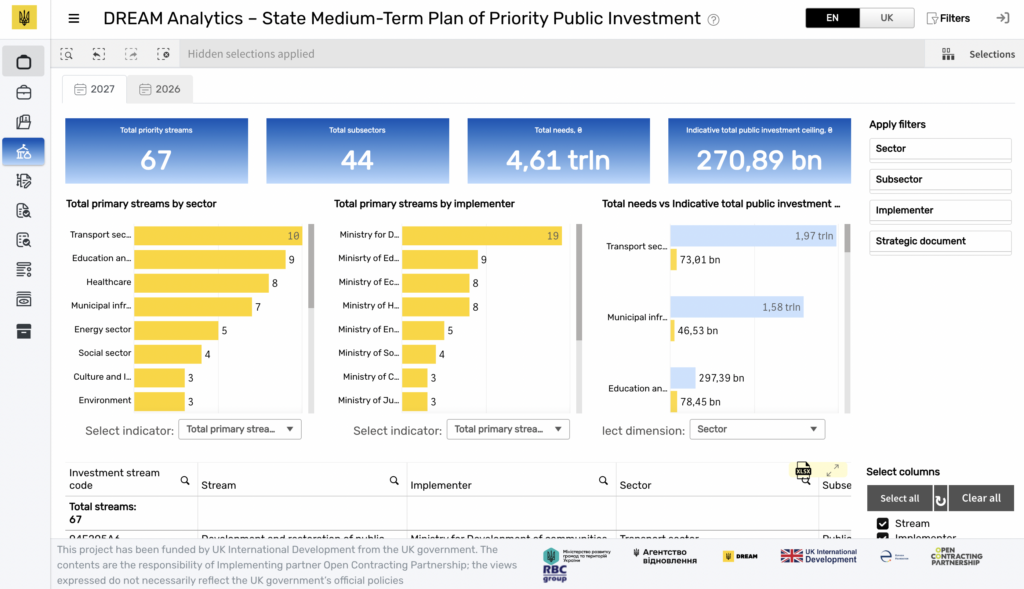
The Ukrainian Government has now completed its second Medium-Term Plan for Priority Public Investment (MIP) for 2027–2029. It is the country’s first fully digital strategic investment planning cycle. That process yielded the State Single Project Pipeline: 142 investment projects and 65 investment programs, all assessed and approved through DREAM. At the local level, 900+ communities and 23 regional administrations have their own pipelines formally approved as of June 2026, covering over 13,700 projects and 124 programs. More than 10,400 of those projects have already moved forward for ministerial sectoral assessment.
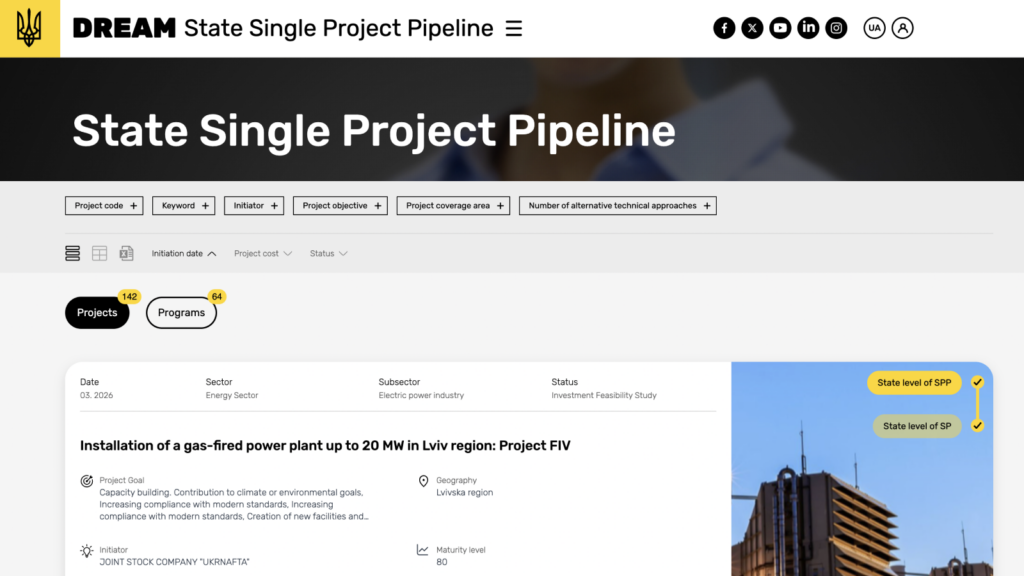
DREAM is now connected to Ukraine’s broader digital government ecosystem, including the public procurement system Prozorro, e-construction, the Register of Damaged and Destroyed Property, the State Treasury, and the budget system. International partners are conditioning funding decisions on a project’s presence in DREAM. That changes the reform’s status from optional to essential.
2. Scaling fast has exposed real capacity gaps – especially for communities
Participation numbers are strong: 1000+ communities submitted investment plans, 900+ had pipelines approved, 30,000+ people trained across 70+ events. At peak, we fielded 850 support requests from communities every single day.
A reform this ambitious, especially one that gives communities real power, needs a lot of change management and capacity building. Ukraine has 1,235 communities with populations under 50,000, some 94% of all the communities, and every single one of them currently faces the same procedural requirements as the largest cities:
- form an investment council
- prepare a medium-term plan
- conduct sectoral and expert appraisals
- approve a pipeline
- receive investment ceilings
- attract financing
- report on implementation progress and completion/impact assessment
For many small communities operating under martial law, with stretched staff and no prior experience in investment feasibility analysis, this is overwhelming. They were given just 3 months to go from understanding the process, to structuring their pipelines.
The really important next push is improving the quality of submissions and feasibility and appraisal behind them. The first pipeline cycle often became an exercise in submitting data to meet system requirements rather than doing the analytical work the reform intends. Many communities submitted feasibility studies adapted from old projects that do not meet the new methodological standards of the Five Case PIM planning model that Ukraine uses.
As of mid-2026, the system contains over 14,000 projects in single project pipelines with an estimated value of ₴1.26 trillion (around $28.1 billion), but we are not yet confident that all of them represent genuinely investment-ready projects.
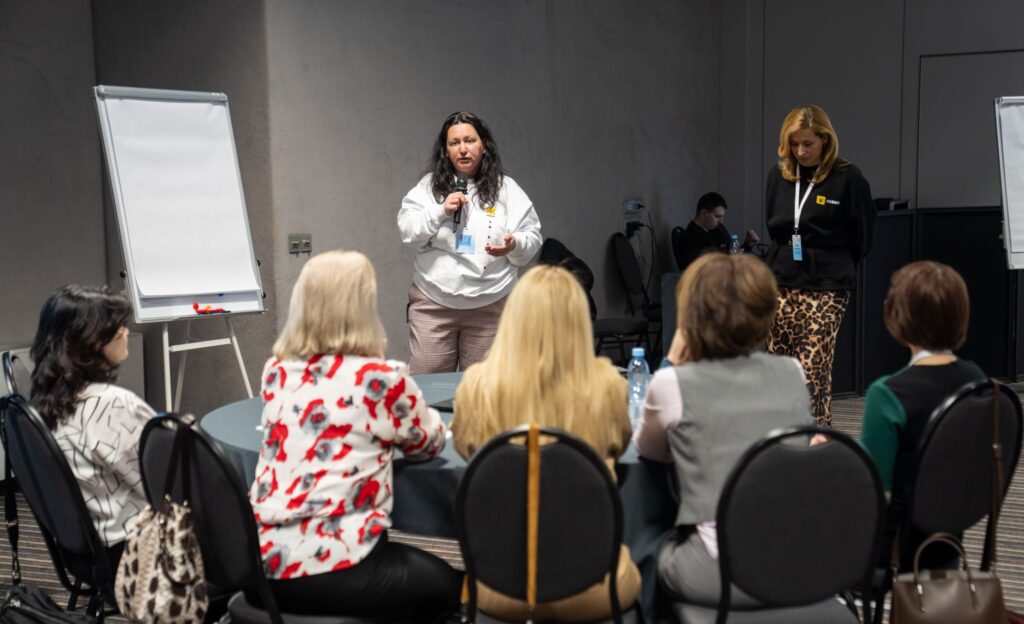


That’s why the most important thing we are investing in for 2026 is building a regional support infrastructure: PIM Centres of Excellence embedded in Agencies for Regional Development (starting from a pilot in 6 regions and scaling across all 24 regions), so communities have consistent, nearby expert support rather than having to reach our Kyiv-based team. We need to simplify the process for smaller communities and develop clearer sectoral and appraisal guidelines so communities understand what a good project actually looks like in every sector, not just filling in guided questions.
We will be working hard to elevate the voices of communities and regions. The feedback we have received has already shaped important design decisions and areas for improvement; we now need to show that we are not only listening, but acting.
3. The data and business intelligence tools are significantly stronger
2026 saw a major improvement in how DREAM surfaces its data. The Business Intelligence module now provides public dashboards covering the national and local investment pipelines, funding distribution across sectors, appraisal status, and project progress. The public portal and interactive DREAM Map let citizens, officials, and partners see what is in the pipeline and where things stand, down to individual project profiles showing funders, technical specifications, implementation status, and payments.
Better data and greater transparency are already driving faster coordination and improved outcomes. When a $200 million program for school shelters and canteens needed to select projects, DREAM ran the entire process openly: more than 500 proposals were submitted and 156 projects were selected in a matter of weeks. A process that would historically have taken six months or more was done in weeks and every step was visible online. Let’s not underestimate the impact of this. That means over 68,000 children will be safer from Russian bombs at least six months earlier.
International partners are using this data to make financing decisions and investment programs, including the European Investment Bank where more than $500m in investment has been coordinated with the help of DREAM. That is a meaningful shift with DREAM becoming coordination infrastructure. Open data APIs mean third parties can build on top of the system to provide important accountability.
The next step is to integrate processes with the Ministry of Finance’s systems for the State Budget, Debt and the Treasury to track not just what is planned but what is actually being spent. We need better data on three vital infrastructure metrics: time delays, cost overruns and quality of implementation. Closing that critical loop will move DREAM from investment planning toward genuine investment management.
4. We are now using AI, carefully but with real results
Given the major capacity needs, there is a compelling case to use AI to support project planning and delivery workflow. We are using a carefully engineered retrieval-augmented generation (RAG) concept including using local LLM model (MamayLM) with isolated environments for embedding sectoral content and interface guidance, all deployed on our secure server. It will not replace human judgement but inform and advise, helping users navigate a complex set of rules and regulations, and to assist them with early-stage quality checks on project submissions.
We are currently testing this through an integrated chat assistant, contextual guidance prompts embedded in workflows, and AI-assisted tools to help appraisers assess feasibility study quality. The goal is to turn DREAM from a data submission platform into something closer to an active assistant, that can flag gaps in a feasibility study before it goes to formal appraisal, or walk a community officer through the logic of a medium-term investment plan step-by-step.
Early user feedback is very positive. We share more on what we have already built and what’s next in this video.
5. Real impact is visible, as are some hard lessons
Amid all the systemic challenges, there are real stories of what this reform is for.
In Irpin, Kyiv Oblast, the Radist Kindergarten was one of the worst-hit preschools in the city, reduced to rubble by shelling in 2022. With EUR 4.9 million from Lithuania’s development cooperation fund and reported through DREAM, it has been fully rebuilt and renamed Ruta, after Lithuania’s national flower, also cherished in Ukrainian tradition. The new building has an accessible bomb shelter, modern classrooms, and facilities for children with special needs. It is one project among thousands in the pipeline, but it is a compelling example of what the system is meant to make possible.
Some communities are using DREAM in exactly the way that we all hoped in the user design workshops: going through their project portfolios seriously, reconsidering old initiatives, cancelling things that no longer make sense, and focusing resources on what will genuinely deliver results. That analytical shift from “submit everything and see what gets funded” to “invest in the right things for the right reasons” is the whole point of the reform. We are starting to see this happen.
But we should also be clear-eyed about how much remains to be done and how such transformational reforms have stretched everyone involved across government, communities, international partners, and our own incredible DREAM team. The system was built under extreme pressure, with two-week sprints leaving little time for user feedback and testing. The team, including government, uStudio as our technology partner, and our own Project Office, have been working at a cracking pace over the last year to support the Single Project Pipelines Process.
We are actively documenting what we are learning, because we think this reform has lessons for other countries: on digital transformation, on multi-stakeholder coalition-building, on what it actually takes to shift investment culture in a public system.
As far as we know, no country has yet built and operated a fully digital, end-to-end public investment management system at this scale, and Ukraine is doing it during a war. Yet the determination of the people involved, across communities, ministries and civil society, is something we feel every day. We are proud we can do our part to support them.
Our guiding principle throughout: consistency beats perfection. What matters is that we keep learning, and keep improving, for the communities and citizens depending on this system to deliver. What also matters is that Ukraine’s international partners continue to support the process, especially with investing in capacity support for Ukraine’s many regions.
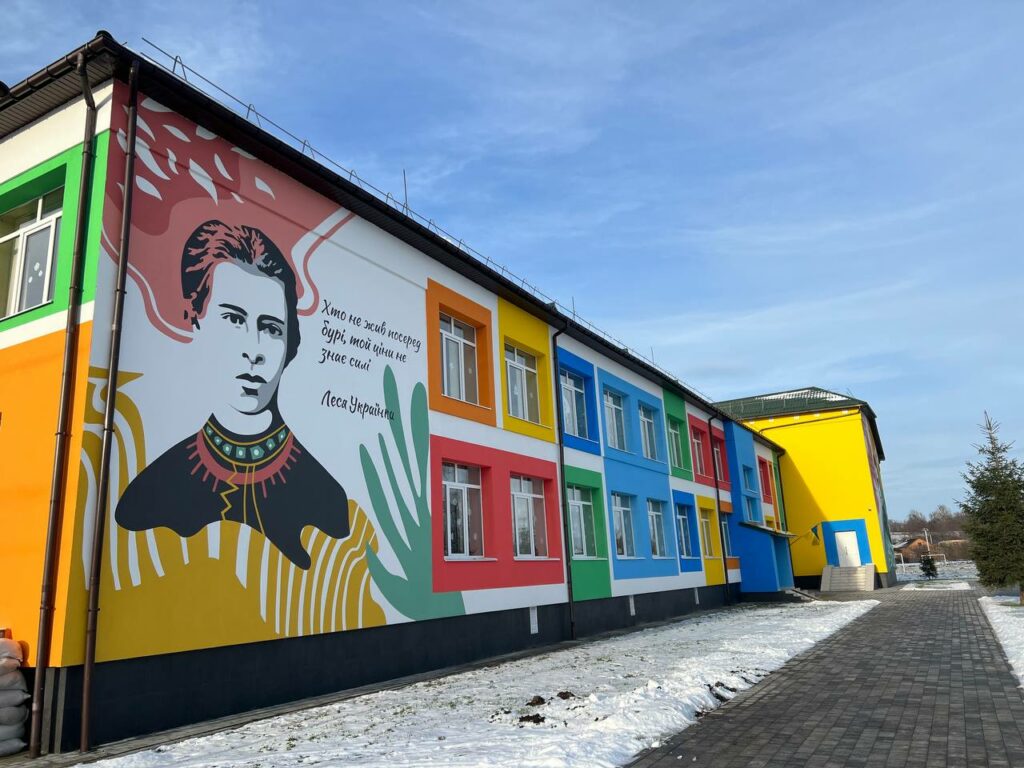
In Pystomyty in the Lviv region, a school renovation managed through DREAM carries a mural quoting the writer Lesya Ukrainka: “He who has not lived in the midst of a storm does not know the value of strength.” It is hard to read that without feeling the weight of what Ukrainian communities are doing as they rebuild strategically and deliberately, even as the war continues.
Gavin Hayman is Executive Director of the Open Contracting Partnership. Viktor Nestulia is Director of Ukraine support for OCP and heads our DREAM Project Office. OCP co-coordinates the DREAM Project Office alongside the Government of Ukraine, with support from FCDO, the UK Embassy in Ukraine, the Government of Norway, UNODC, and a broad coalition of international partners.


