Open up public contracting
to fight corruption
Public procurement is where the money, power and the discretion in government are concentrated. Making up 1 in every 3 dollars spent by governments worldwide for a total value of over US $13 trillion, the sums spent on procurement are enormous and make it government’s number one corruption risk. The OECD reports that more than half of foreign bribes by companies were paid to obtain public contracts.
As public procurement touches every part of our lives – from roadworks to school meals to critical medicines – it is where citizens see governments deliver on promises of sustainable development or fall short of their expectations, damaging trust in the fairness and effectiveness of government.
Old school, paper-based or opaque systems increase the risk of public funds being lost to corruption. From awarding contracts to political allies or relatives to cartels of businesses fixing prices and beyond, there are many creative ways to exploit public procurement for personal gain, as detailed in our Idiot’s Guide to Looting Public Contracts and Getting Rich Quick.
Open contracting takes a systemic change approach to this systemic problem using data, technology, civic participation and institutional change. And the evidence shows that open contracting works!
In 2023, the Conference of the States Parties to the UN Convention Against Corruption agreed the first-ever resolution dedicated to public procurement, outlining the key principles of open contracting for anti-corruption and setting the global standard backed by over 180 governments worldwide.
How can anti-corruption professionals get started translating principles into practice?
There are three key pillars:
- A robust legislative and regulatory public procurement framework. Making sure the right rules and regulations are in place to create a competitive, fair, transparent market.
- Proactive disclosure of open data across the whole cycle of public procurement. Getting the tech right so that electronic procurement systems collect and proactively publish valuable data, generating insights and powering analytics and ‘red flags’ risk indicators.
- Monitoring and feedback loops from government, auditors, citizens, media and businesses that enable oversight and feedback on procurement integrity and performance.
Red flags in public procurement
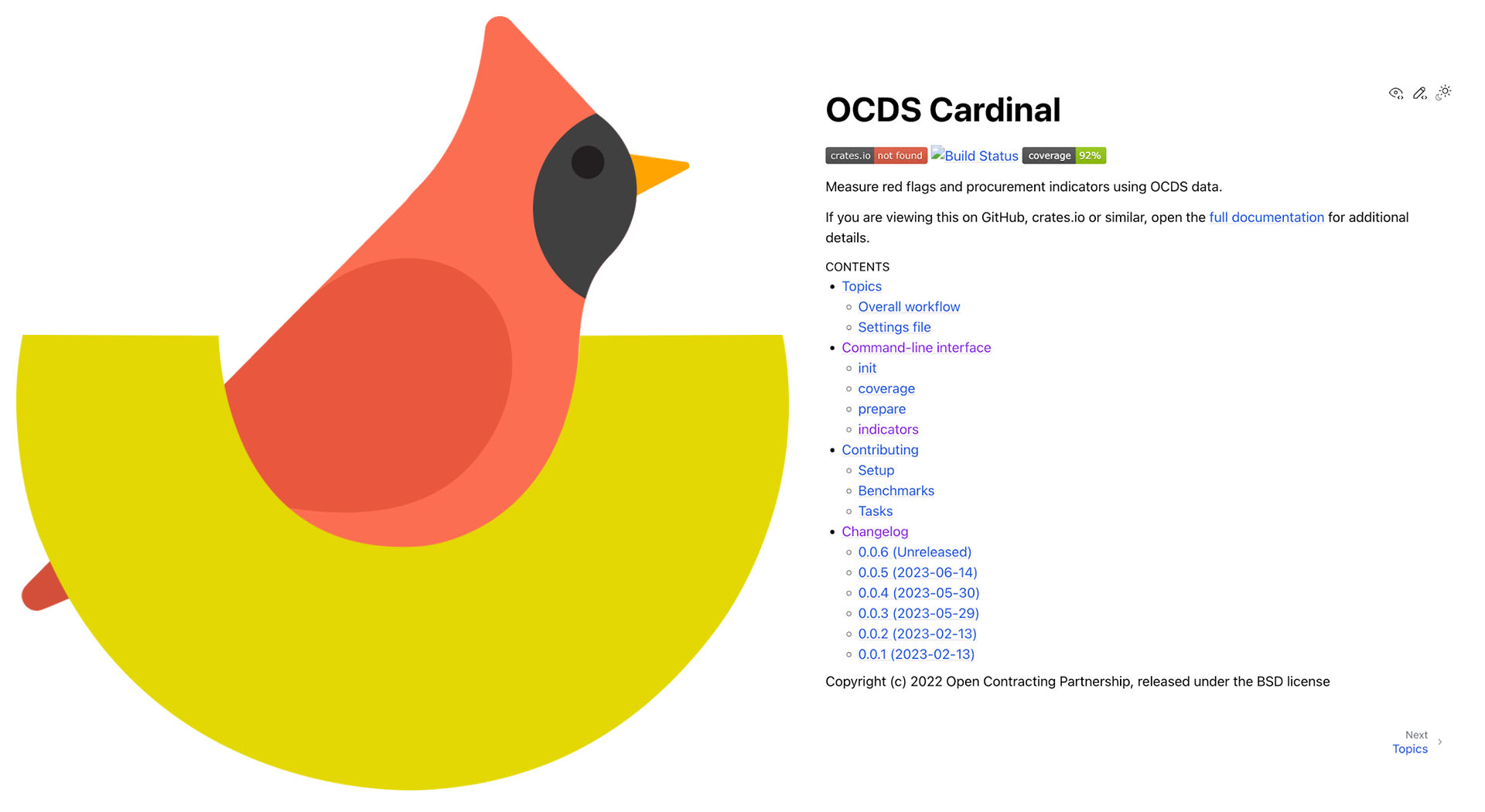
Cardinal, our open-source library to calculate public procurement red flags
The 3 pillars of implementing open contracting for anticorruption
We can help you with:
Our global team works with governments, civil society, development banks and supplier networks to turn anti-corruption principles into practice, from red flags to concrete action across three areas: legal frameworks, data and tools, and civic oversight.
Key resources & data tools
Red Flags in Public Procurement. A guide to using data to detect and mitigate risks
Our red flags guide provides a methodology to calculate a list of risk indicators that identify corruption risks throughout the procurement process from planning to implementation, mapped to the Open Contracting Data Standard.
Mythbusting Confidentiality in Public Contracting
Concerns around confidentiality of information in contracts are arguably the most significant barriers to more openness. This guide proposes five core principles to make contracting information open-by-design to avoid a lazy default of routinely classifying information as confidential.
Open Contracting Legislative Guide
This new report provides insights and guidance on how countries have cemented open contracting approaches into their legislation modernizing public procurement, supporting reforms that put transparency, efficiency, and equity at its core.
Cardinal
Cardinal allows you to calculate common risk indicators of corruption and collusion in procurement using open contracting data.
Open Data for Anti-Corruption
The Open Data Charter’s Open Up Guide to Combat Corruption identifies priority datasets, open standards and open data use-cases that governments, civil society and other stakeholders can focus on to tackle corruption at all levels and to respond to increasingly complex corruption networks.
Case studies


Partners
We work with a wide range of civil society organizations, governments, funders and multilateral institutions to advance good governance and integrity in public procurement.
We are a member of these CSO Coalitions:
 |
 |
 |
 |
 |
 |
Get in touch

Kristen Robinson
Head of Advocacy

Gavin Hayman
Executive Director

Camila Salazar
Head of Data Analytics and Learning
