Better meals through open and inclusive public contracting
Why does this matter?
Across the world, millions of children rely on school meal programs for their daily nutrition. In 2024, 466 million children in 169 countries received school meals. In low-income countries, only 27% of children receive these meals, compared to 80% in high-income countries.
Global funding for school meals has more than doubled, rising from US$43 billion in 2020 to $84 billion in 2024, with 99% of this funding coming from national governments. On a national level, school meal programs typically generate approximately 1,500 jobs for every 100,000 children, across logistics, food production and farming, and supply chains.
Poor procurement practices mean that despite the increase in investment, children risk not being fed, and the meals served are often of low quality, unhealthy, and unsustainable. Inefficiency and corruption are rife in the procurement of food and provision of meals, with suppliers failing to deliver or inflating prices. Many public entities are overly dependent on direct contracting with a single supplier. This leaves administrators prone to accepting suppliers’ terms, rather than creating reliable and predictable markets for smallholders and family farmers to deliver quality ingredients.
The deals behind the meals
How open contracting helped fix Colombia’s biggest school meal program


How open contracting can help
Implementing open contracting to food procurement works: by design goal-driven reforms with clear impact indicators, building coalitions of change including all stakeholders from students to local suppliers, and developing digital solutions that powered by open data.
Our work to ensure better meals demonstrates how data can improve transparency, uncover inefficiencies and foster inclusivity. By equipping governments with tools to analyze and act on procurement data, this innovation empowers schools, communities, and farmers. It promotes healthier meals, creates stable markets for small producers, and strengthens food systems, benefiting society by enhancing equity, sustainability, and economic opportunities.
By opening up and transforming public spending through open contracting, we can ensure $84 billion of government spending on school meals serves our children.

Projects and partners
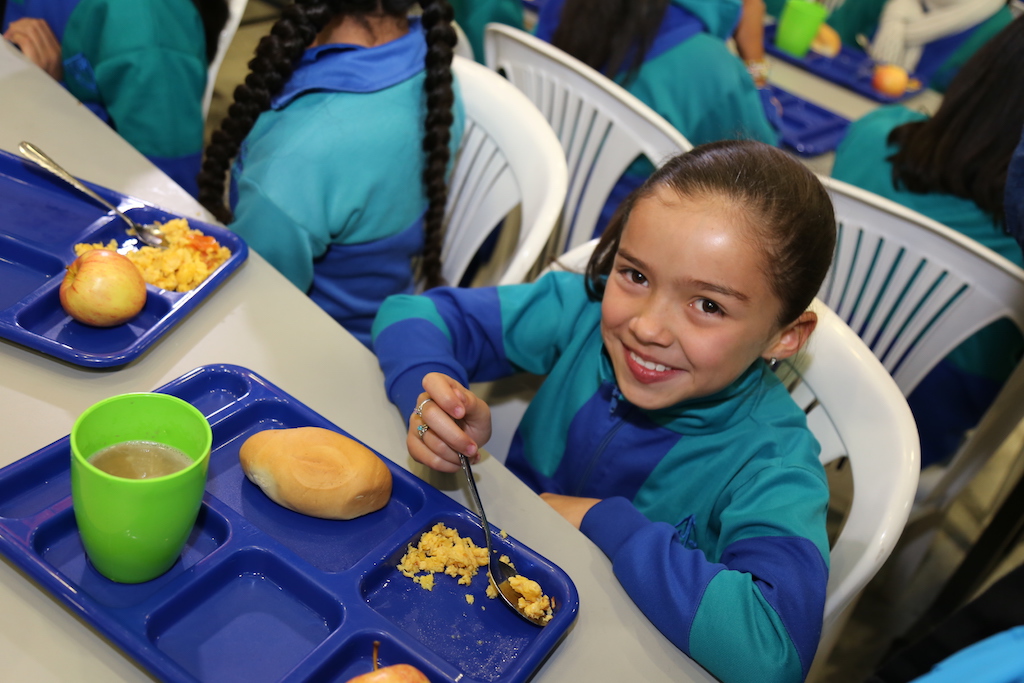
- In Bogotá, we opened up and streamlined public procurement to eliminate wasteful intermediaries, building a transparent, data-driven system that increased efficiency, reduced costs, cut out price-fixing, all while ensuring over 800,000 children received healthier meals from trusted suppliers every day.
- In Palmira, Colombia, we supported reforms that helped local farmers—many of them women—become suppliers for the city’s school meal programs. These strategies resulted in better meals for children and significant economic opportunities for 200 small-scale farmers.
- The US city of Philadelphia implemented open contracting practices to award a best value contract for fresh fruits and vegetables for children in the juvenile justice system, benefiting local farmers and increasing the quality of meals.
- In Paraguay, students are monitoring government spending on school infrastructure and better meals linking government spending to local monitoring to ensure food arrives where it should.
- In Mexico City, we developed a simplified e-marketplace system that enables small and marginalized vendors—such as women-led businesses and Indigenous groups—to easily register as vendors and supply products. By reducing these barriers, almost 30% of 2024 contracts were awarded to these target groups.
Contact us

