Beyond technology: twelve African countries on what e-procurement reform actually takes

Nearly a decade ago, many African countries began automating their procurement systems. Public procurement is the oil that powers the state machinery and ten years on, the gap between countries that have made digital procurement work and those that are only just beginning their journey still remain.
In July, we, alongside the United Nations Office on Drugs and Crime (UNODC) and Open Ownership, hosted by the Zambian government through the Zambia Public Procurement Authority (ZPPA), convened twelve* of those countries in Lusaka. Procurement agency heads, technical e-GP technical leads, and representatives from anti-corruption agencies, all at different stages of their digital procurement journeys, came to share what has worked, analyze challenges, and discuss how to accelerate e-procurement reforms.
What made Lusaka different was the candor. The conversations that mattered were about institutional resistance, political negotiations and setbacks that rarely make it into technical guidance. The thing that people say in conference hallways was center stage: that building an e-procurement platform is only the beginning. The task is about governance reform. And the barriers to getting it right are political commitment, institutional leadership and the willingness to genuinely rethink established ways of working.
As one participant observed, public procurement should work like a road open to every vehicle, not just the articulated lorries. The small business owner with the best product at the best price should have the same opportunity to compete as the largest supplier. Too often, procurement systems are built like highways designed only for the biggest players. That is a governance issue and fixing it requires the same political will and institutional commitment as any other reform.
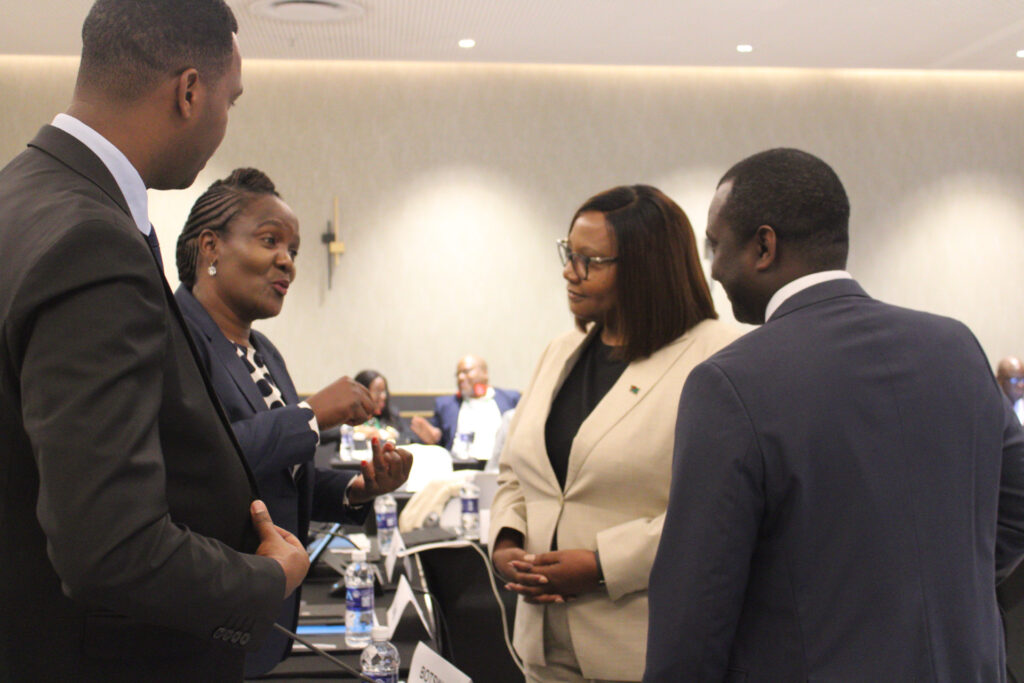
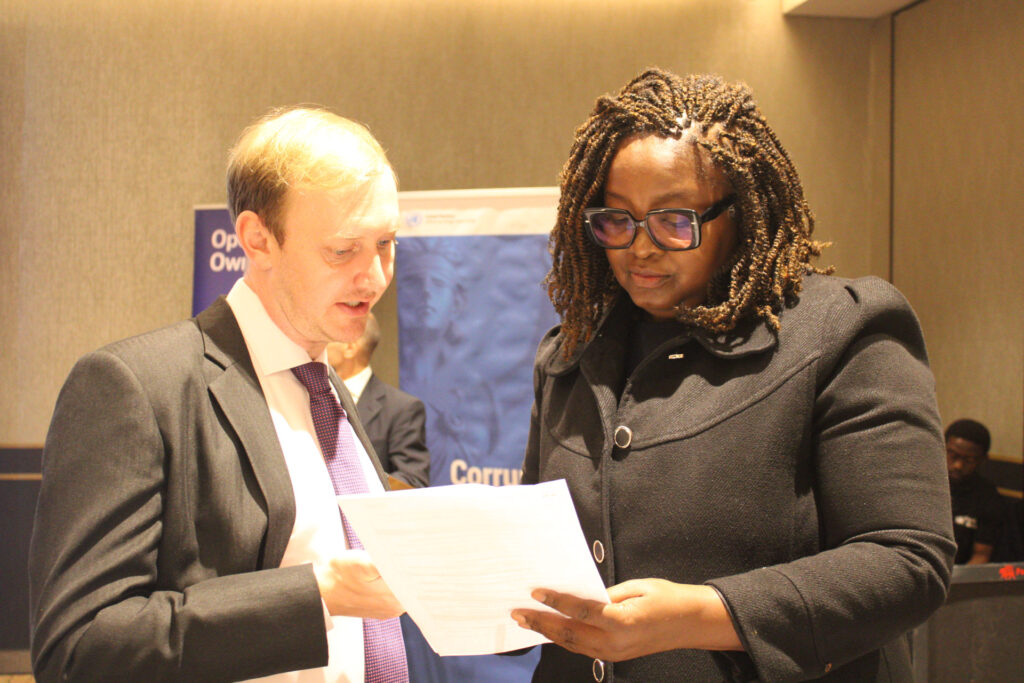
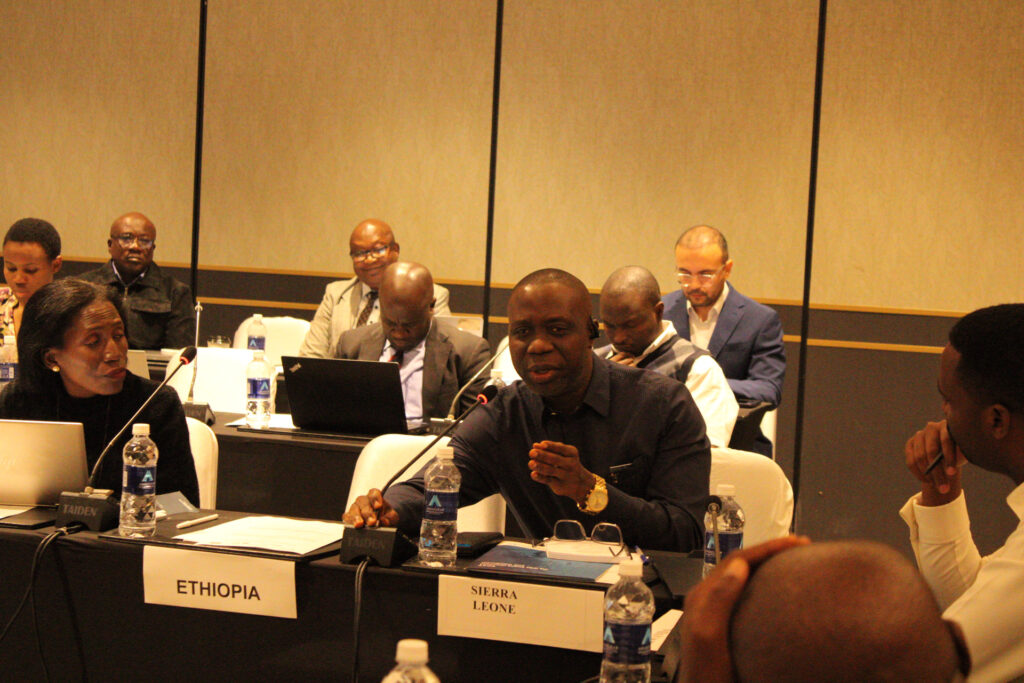
1) Four delegates from Rwanda, Malawi, Zambia and OCP talking together 2) UNODC and ZPPA representatives reviewing document together 3) Sierra Leone delegate speaking during the workshop
Three insights from the week illustrate why:
First, technology is not the blocker. Every country in the room acknowledged that software can be built or purchased. The difficult work lies in securing political support, redesigning business processes, investing in people and sustaining reform beyond the initial launch. Tanzania’s experience showed this most clearly. After transitioning from a vendor-owned platform to its locally developed National e-Procurement System (NeST), Tanzania has integrated more than 30 government systems, embedded Open Contracting Data Standard (OCDS) publishing, introduced automated red flag monitoring, and built mobile applications that allow even small procuring entities and suppliers in rural areas to participate. Hundreds of thousands of tenders are now published as open data in real time. The technology worked however the harder work was managing institutional change, building local capacity and maintaining political commitment throughout.
This is also where global commitments translate into national action. The UNODC guidelines agreed in Doha call on governments to adopt digital procurement technologies, publish procurement data in open formats and use that data to detect and deter corruption.
Doha gave us the guidelines. Lusaka gave us the room where they became real. Twelve countries, honest conversations, no pretending the hard parts are easy. That is how reform actually happens.
Second, who gets on the road matters. One of the most energizing discussions centered on how digital procurement expands access rather than simply improving efficiency. Small businesses, women-owned enterprises and first-time suppliers are watching to see whether reform opens the road or simply replicates the same barriers in a new interface. That question should sit at the center of system design.
Rwanda’s Umucyo and Italy’s National Anti-Corruption Authority (ANAC) both demonstrated how thoughtful system design, combined with beneficial ownership transparency, can surface corruption risks and widen the market at the same time. Knowing who won the contract matters. Knowing who owns the company that won it matters more.
Third, peer learning is what turns guidelines into action. You can read the research on what works. You cannot read about what it felt like to push a reform through institutional resistance, or what compromise looked like when the political moment was right. These exchanges between practitioners who have actually done it are what transform guidance into something countries can use.
For Zambia, hosting this conversation is not just about bringing countries together. It is about learning from each other, being honest about the gaps, and leaving with practical ways to make procurement more open, competitive and accountable. That honesty about what has worked and what has not is what made the room useful.
A communiqué was drawn up after the regional workshop declaring a shared, ambitious vision. The relationships formed over two days in Lusaka will carry into the months ahead. The road towards open, efficient and accountable public procurement is far from complete. But the right people are building it together. Together, and from wherever we are starting, we can make public money work for the public good.
* The twelve African countries convened were: Botswana, Ethiopia, Kenya, Malawi, Mozambique, Nigeria, Rwanda, Sierra Leone, South Africa, Tanzania, Uganda and Zambia.


