First opportunities: How Lithuania integrated social criteria into public procurement

Challenge: Lithuania has more than 4,000 procuring entities who can use their buying power to uplift marginalized groups, including people with disabilities who face disproportionately high unemployment rates.
Open contracting approach: The Public Procurement Office worked with other government institutions to develop eight social criteria that buyers could choose to use in their procurement procedures. With support from OCP’s Lift program, they underwent a people-led policy re-design that included change management strategies, and made adjustments to the e-procurement system so the uptake of social criteria could be tracked on a public dashboard in real time.
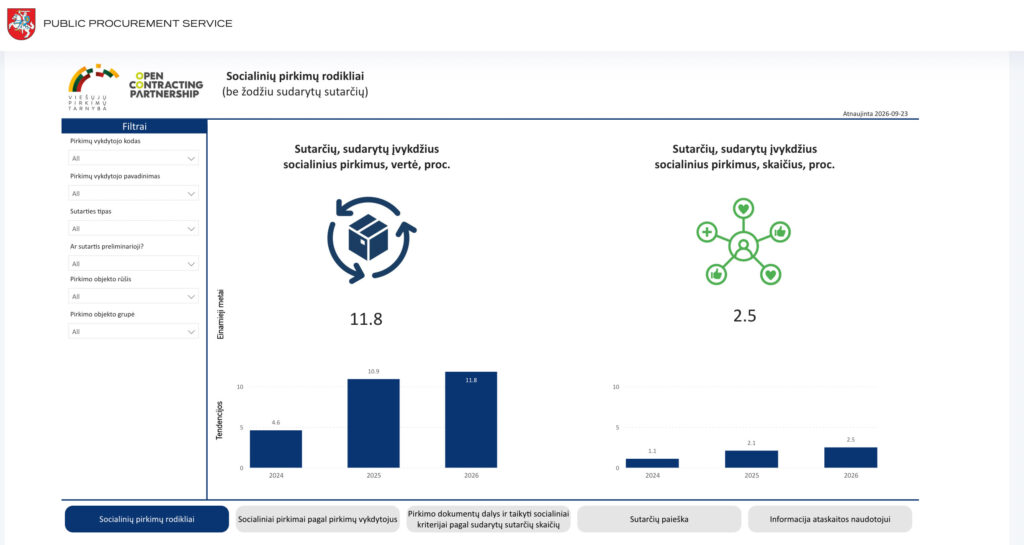
Results: The share of procurement value carrying social criteria rose from 4.3% in 2024 to 10.9% in 2025, exceeding the 7% target set for the first 18 months, and has grown to 12.6% in 2026 so far.
We can make more products, we have more income, and with that, we have more impact on society.
Around 151,600 people of working age in Lithuania have a disability, and more than two-thirds of them don’t have a job. They are software developers, academics, skilled tradespeople, and many more qualified candidates ready to work. What they need from employers is reasonable accommodation, which in most cases is simple and low-cost to provide.
But they don’t have it easy. Employers in Lithuania remain reluctant to hire them, for reasons that include persistent misconceptions about what disabled workers can do and incentives that are insufficient to shift hiring practices.
Public agencies and cities could offer a solution: they buy goods, services and works from companies that employ tens of thousands of people. Close to €10 billion a year flows through Lithuania’s public procurement system, roughly 12% of the economy, which makes the state one of the largest indirect employers in the country.
Procuring entities have enormous buying power that can be used to influence market trends and have a positive impact in their communities. Recognizing this, in late 2023 Lithuania introduced eight criteria for socially responsible procurement that government buyers can use to spend their procurement budgets in ways that uplift marginalized groups.
These voluntary requirements and supporting guidelines aim to help create jobs for people with disabilities, improve gender equality and staff well-being, and encourage businesses to commit to more responsible and sustainable production processes. They can be applied at different stages in the procurement process, such as in the technical specifications, the bid evaluation criteria, the contract performance terms, and supplier qualification requirements.
Lithuania’s social procurement criteria
- Accessibility and suitability requirements for all users
- Fair trade criteria
- Employment of people with disabilities and other vulnerable groups
- Paying a fair wage
- Balancing family and work commitments
- Gender equality and non-discrimination against others
- Prevention of psychological violence in the workplace and assistance to individuals who have experienced such violence
- Reserved right to participate in procurement
“We will first ensure that all public buyers in Lithuania are aware of the power they have through public procurement and boost how they use these criteria and promote inclusion through their public contracts,” says Greta Ambrutytė, the Head of the SPP Department at the Lithuanian Public Procurement Office.
When it came to encouraging buyers to adopt the new social criteria in practice, Lithuania’s Public Procurement Office relied on a range of measures:
- Training over 600 buyers and suppliers
- Creating an online network of early adopters to exchange experiences
- Establishing a helpdesk for buyers applying social criteria
- Showcasing good practices through public recognition
- Supporting agencies with high impact potential with annual planning
- Creating an inter-institutional working group
Through OCP’s Lift impact accelerator program, we supported them to set a target for at least 7% of procurement value to use socially responsible criteria within 18 months, and develop a way to track the uptake publicly in real-time to incentivize institutions through positive competition. The Public Procurement Office launched its reporting dashboard in mid-2024.
By the end of 2025, 10.9% of procurement value used social criteria and the rate for 2026 now stands at 12.6% as of September.
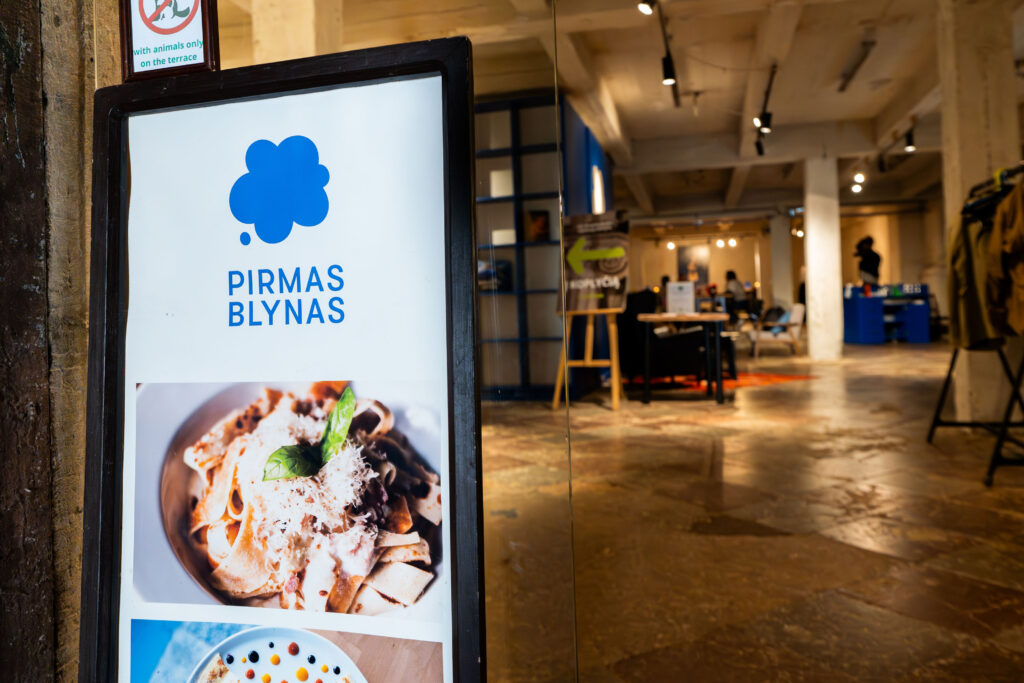
Those benefiting from the changes include social enterprises like Pirmas Blynas, a catering business and coffee shop in Vilnius that employs people with disabilities. Winning a government catering contract has helped the business to diversify its income and not rely on subsidies, which is typical for many social enterprises.
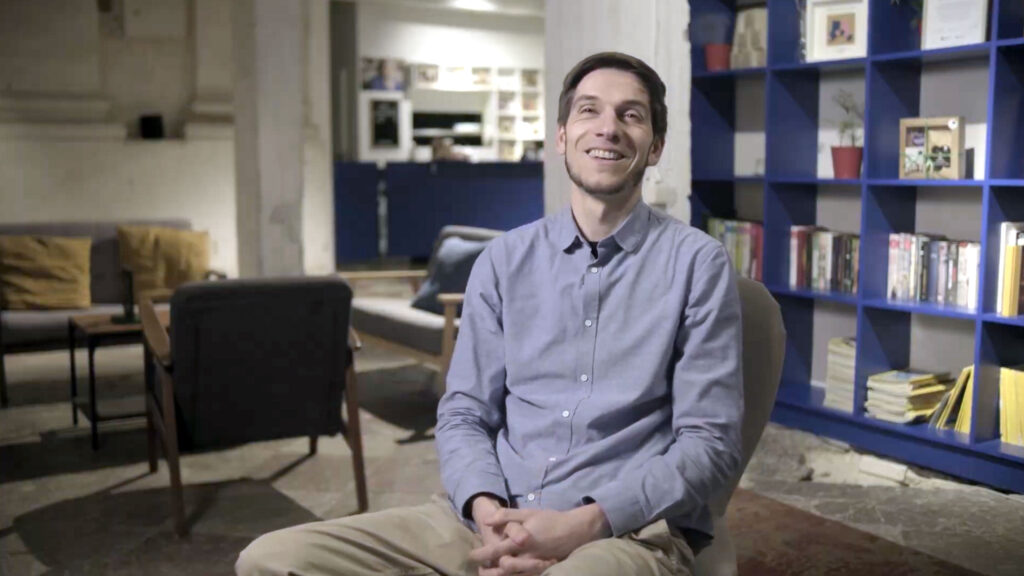
“[Social procurement] gives our company a lot of opportunities,” says Pirmas Blynas’ owner Tim Van Wijk. “We can make more products, we have more income, and with that, we have more impact on society.”
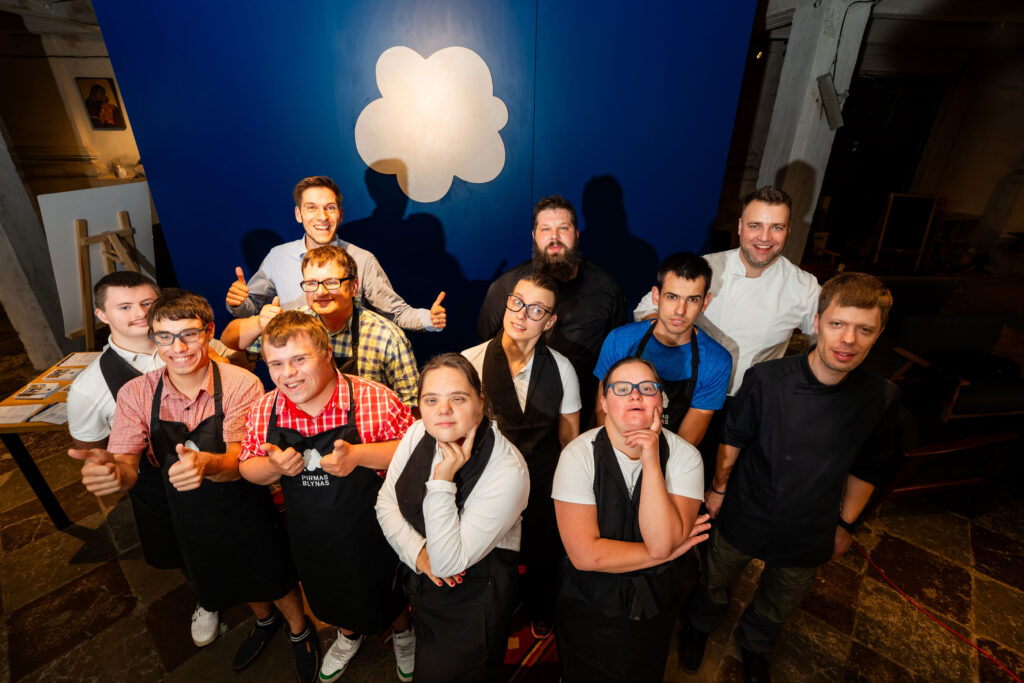
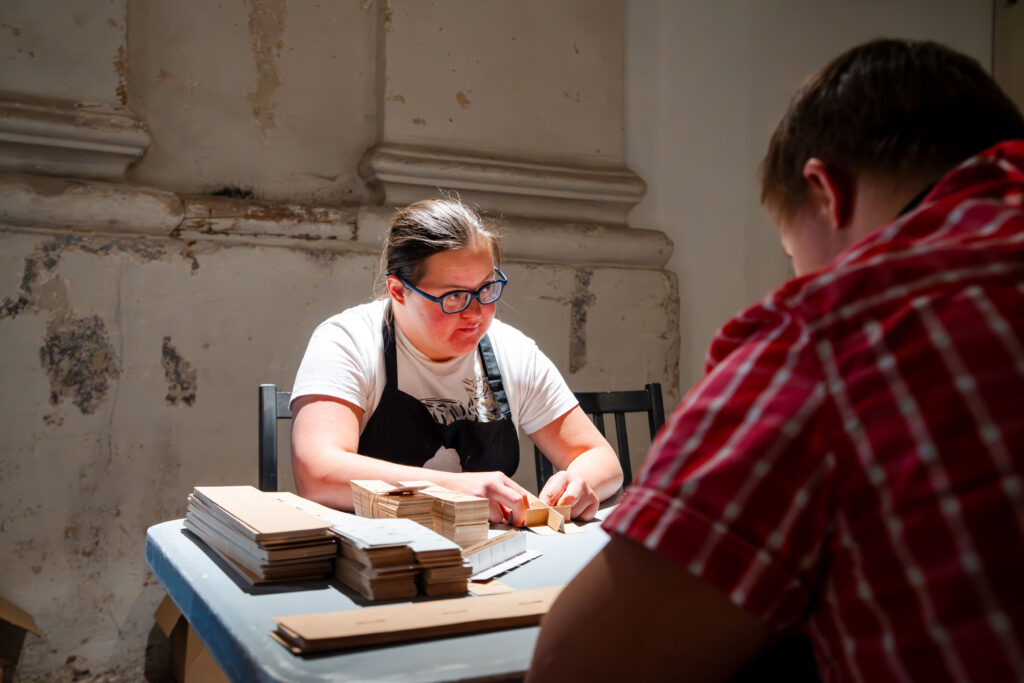
His employees gained experience working at a couple of functions for government institutions last year, says Van Wijk. “They do something new, they learn new skills or use their skills in a new environment.”
From guidelines to practice: Operationalizing social procurement
The Public Procurement Officer co-created the social criteria and supporting guidelines with a working group of 12 institutions active in disability rights, including the Ministry of Labor and Social Affairs, the Lithuanian Public Employment Service, the Agency of People with Disabilities Rights Protection, and the Data Protection Agency.
Through Lift, we supported them to undertake a people-centered policy re-design. The NGO Diversity Charter, a member organization working with inclusion and workplace diversity, provided expert recommendations to improve the social criteria and inform the training program for buyers and suppliers.
“When we talk about immigrants and people with disabilities, they are the most
vulnerable groups in the labor market. This is where public procurement can help. We need to include those communities in the decision-making process from the very beginning,” highlights Rygilė Trumpytė, Chief Executive of the Diversity Charter.
The Public Procurement Office also directly worked with the buyers such as the Ignitis Group and the Lithuanian Airports, some of the largest buyers in Lithuania to integrate social procurement in their annual plans. “Blindly including a social tender requirement without consulting the market is a straight way to failure,” said Livija Šepetytė, Sustainability Partner at Ignitis Group.
To track socially responsible procurement uptake in real time, the e-GP system’s contract reporting sub-system was outfitted with a new set of mandatory fields to capture (1) if social criteria have been used in the procurement process, (2) which social criteria, and (3) at what stage of procurement (tender specifications, award criteria, contract terms, etc.).
The initiative came after Lithuania had taken a similar approach to greening its procurement, incorporating criteria that favor environmentally friendly products and services in 100% of procurement procedures awarded through the procurement system.
Results
Within three years, the total value of procurement using social criteria increased from 4.3% (EUR 467 million) in 2024 to 10.9% (EUR 1.2 billion) in 2025, exceeding the reform goal of 7% in the first 18 months, and continuing to grow to 12.6% in 2026 (EUR 955 million as of September), according to the real-time metrics published on the Public Procurement Office’s website. Similarly, the proportion of contracts using social criteria increased from 1.1% (1,657) in 2024 to 2.1% (3,336) in 2025, and 2.5% (2,587) in 2026 to date.
In 2025, 376 public buyers (approximately 15% of public buyers running procurement) awarded at least one contract using social criteria. But some buyers rely on them much more often. For example, the social care home Jasiuliskiu socialines globos naiam awarded all 83 of its contracts using social criteria in 2025, totaling more than EUR 2.5 million.
What’s next
When Van Wijk’s social enterprise opened in 2018, it was the first of its kind in Lithuania. He sees his mission to help people – and society – improve and develop over time. The business’s name, meaning “First Pancake” in English, is a nod to the first, flawed one in the pan, and the idea that your initial attempt at anything new rarely turns out perfect, but helps you learn and refine your approach.
Van Wijk is careful about what social procurement should and should not be: “The social criteria should be a plus. The selection should be on the basis of what the companies offer. It shouldn’t be just because of the social criteria alone.”
Social criteria is currently included most often in the performance terms of the contract. They are the hardest part of any contract to police, and the dashboard only records that a criterion was applied, not how it was implemented in practice. The PPO is regularly updating its guidance based on what it’s learning and addressing what social procurement means in concrete terms, whether it’s accessibility of buildings, promotion of universal design, or transparency in wages.
The reforms aren’t just a policy change. They represent a cultural shift in how public procurement can create value for society. As Lithuania looks ahead, it is exploring how to measure the broader socio-economic effects of this reform to show that social procurement is not just a nice-to-have, but a catalyst for sustainable, inclusive growth.
“Change in public procurement is happening. And it is happening not because someone requires it of us, not because it is somewhere prescribed and mandated – but because we ourselves are beginning to understand that public procurement can deliver on other policy areas too,” said Darius Vedrickas, Director of the Lithuanian Public Procurement Office at a recent social procurement conference in Vilnius.
The first pancake is rarely perfect, but who ever stops at one?
Photo credits: Joris Satunas


