Beyond transparency: how open contracting can help more businesses compete

We should never give up just because we failed once. Keep applying and make sure your documents are always ready. The more we participate, the more we learn.
When Ufahamu Women Group began competing for public contracts in Tanzania’s construction sector, the odds were not obviously in their favour. Women-led businesses in the industry are still too often treated as the exception, and the procurement process itself can feel designed for people who already know how it works. They persisted anyway. They have since won 12 tenders, repaid loans and reinvested in their growth, and the advice they offer to others is hard won: keep applying, keep your documents ready, and treat every attempt as a lesson.
That kind of persistence matters. But it should not be the main thing standing between a capable business and a public contract. Public procurement is one of the largest markets in any country and one of the most powerful levers governments have to support small businesses, create jobs and improve livelihoods.
Yet for many firms, especially those led by women, young people or other underrepresented groups, the public market can still feel out of reach. Even when opportunities exist and rules are publicly available, they are not always written in plain language, published early enough to act on, or accessible through systems that people can navigate without prior experience.
That gap between what procurement could be and what it actually feels like to most suppliers is precisely what open procurement is meant to close. At its best, as our Opening Doors and Opening Markets report set out, it is not just about publishing data. It is the work of making public markets genuinely visible, usable and worth engaging with.
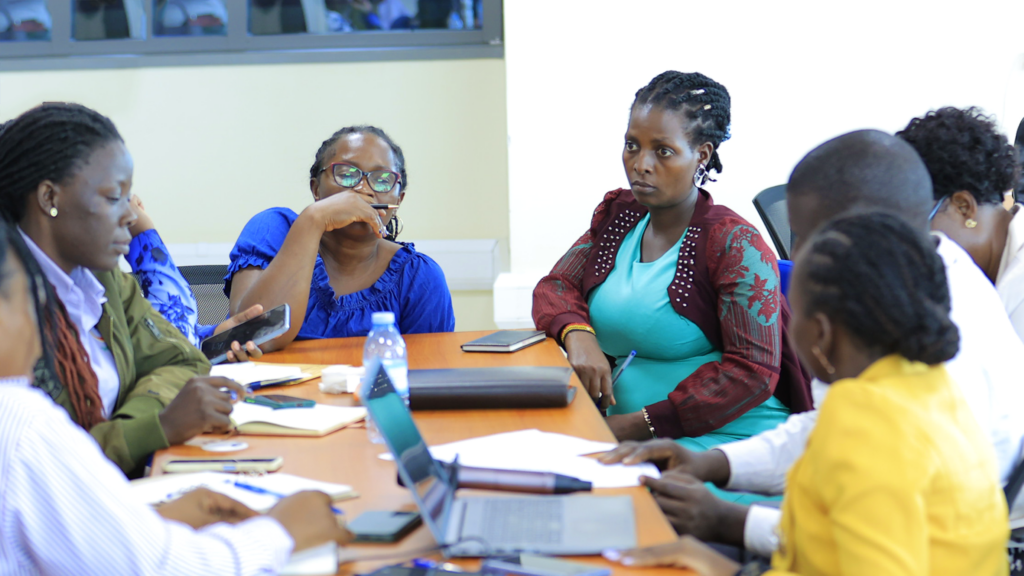
Public does not always mean accessible
There is a version of procurement transparency that meets the legal definition without doing much for the average supplier. Information gets published, but late. Tenders appear on portals that work well on a desktop in a government office and badly on a shared mobile phone in a rural district. Documents are written in procurement language that takes years of experience to decode. By the time a small business has worked out what is being asked, the deadline has passed or the bid bond requirement has ruled them out anyway.
Tanzania’s recent reforms are a practical attempt to change this. Before the launch of the National e-Procurement System of Tanzania, known as NeST, the country’s earlier e-procurement platform only covered parts of the contracting process and was not compatible with other public finance systems.
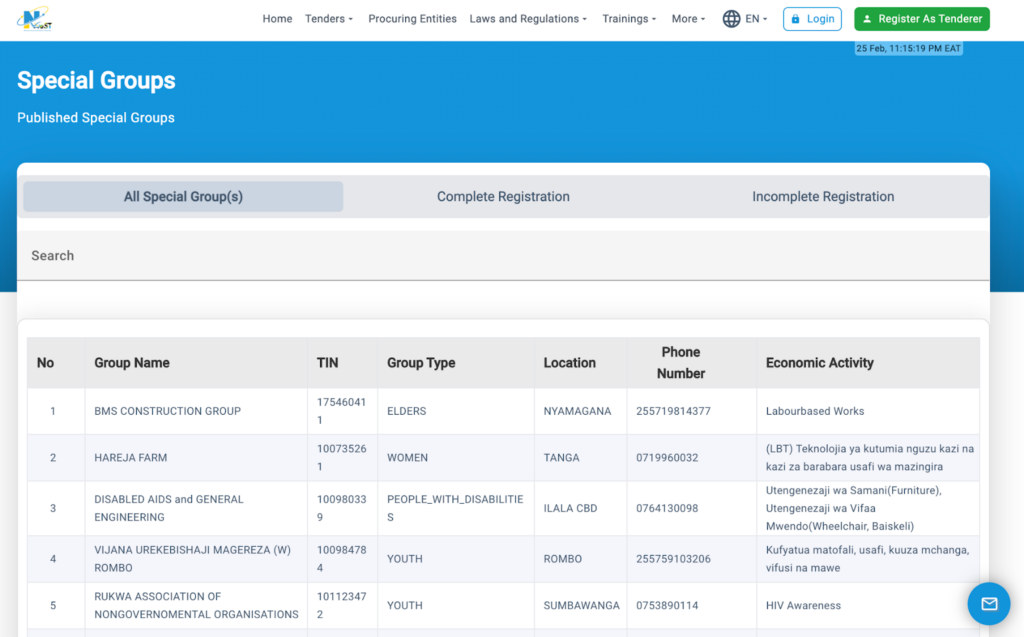
A regional challenge
Tanzania’s experience resonates because the same pattern shows up across the region. In Uganda, women-owned and women-led businesses are estimated to account for nearly 40% of all businesses in the country, yet they receive just 1% of government contracts. Open Contracting Partnership has worked with government and civil society partners to try to close that gap, focusing on the legal framework, data quality and the practical capacity of entrepreneurs to compete. The mismatch between who is running businesses and who is winning contracts is not a coincidence. It is the result of systems that were not designed with those businesses in mind.
Kenya has tried to address this directly. Its Access to Government Procurement Opportunities (AGPO) programme reserves 30% of government contracts for businesses owned by marginalized groups, while open contracting reforms have focused on making procurement data more accessible and interoperable. Kenya’s current open government action plan goes further still, committing to raise awareness of AGPO and simplify the processes for the businesses the programme is meant to serve. The reservation exists; the question is whether the people it was designed for can actually reach it.
Across Uganda, Kenya and Tanzania, the evidence shows that inclusive procurement policy does not deliver inclusive outcomes by itself. Inclusion has to be built into the daily machinery of procurement, through the rules, systems, data, support and feedback loops that determine who can actually take part.
The distance between a policy and an opportunity
Tanzania’s 30% reservation scheme for special groups, covering women, young people, people with disabilities and elders, is a serious policy commitment. Our recent study, supported by GIZ, found that special groups received 1,468 contracts worth TZS 39 billion (US$15 million) in the period studied, representing 7.6% of total contract value. Progress, certainly, but short of the 30% target, and the reasons why are more instructive than the headline number. Nearly half, 47%, of the special group members surveyed did not know the scheme existed. Of those who did, more than half identified procedural barriers serious enough to put them off: tender documents written for experienced contractors, qualification requirements that excluded newer businesses, multiple registration systems with no obvious connection to each other.
These are not niche complaints. They describe a procurement system that was built for a particular kind of supplier and has not yet been fully redesigned for the people a government policy says it wants to reach.
For a small supplier, access is a chain: hearing about the tender, understanding the requirements, registering without getting lost in paperwork, preparing the bid, financing delivery and getting paid on time. Break any one of those links and the opportunity disappears, regardless of what the policy says at the top.
What turns openness into an opportunity
Open contracting can make the market easier to see, but visibility alone does not pay for materials, write bids or help a first-time supplier work out which tender is realistic. The Tanzania study points to the kinds of support that actually move the needle: mobile clinics that go out to where businesses are, customer service centres, training of trainers, WhatsApp learning groups, tailored online courses and reduced registration burdens. In Tanzania, OCP supported this kind of work, hosted by PPRA and the civil society organisation WAJIBU – Institute of Public Accountability (WAJIBU) to encourage local governments to meet businesses where they are, explain the process in plain terms and remove the hurdles that make people give up before they begin.
Finance is another missing link. Getting over the line with a winning bid is only half the challenge; without working capital to cover materials and labour upfront, many suppliers cannot deliver what they have won. The study found that 69% of respondents had not accessed the 10% local council loan designed to help with exactly this problem, and 13% had never heard of it. A loan that most of its intended beneficiaries do not know about is not a financial support mechanism; it is a missed opportunity to make the reservation scheme work.
The Bid for Success initiative, developed with Tanzania’s Public Procurement Regulatory Authority (PPRA) to help women access public markets, offers a small but telling illustration of what changes when support is genuinely hands-on. It trained 200 participants and helped them win TZS 29 million (US$ 11,000) in tenders. While these may seem like small numbers, the principle they demonstrate is not: when targeted support meets a real opening in the market, businesses take it.

From open data to open markets
Tanzania’s experience makes clear that opening procurement is a chain of changes, not a single switch. The data has to be published, the systems have to work for people who are not procurement specialists, suppliers need practical support to take part, and governments need feedback loops good enough to tell them whether competition is actually widening and who is still being left out. Each of those things is achievable. None of them happens on its own.
OCP and UN Women’s work on empowering women through public procurement makes the same wider point: open, accountable and data-driven procurement can only deliver its promise if it is designed to include the businesses that have historically been kept out of it. The mechanics matter enormously, but getting them right is ultimately about something larger than process reform. It is about who gets to participate in the economy.
Kusunkwa Hussein’s advice, to keep applying, to stay ready, to treat every attempt as a lesson, is the kind of counsel that comes from experience rather than policy documents. It should not, however, be the main qualification for winning a public contract. The goal of open procurement is to reach the point where persistence is an advantage, not a prerequisite; where the process is clear enough, the support is real enough and the market is open enough that more businesses get their shot. For women, young people, people with disabilities, elders and small businesses across Tanzania, that is what the work is for.


