Ten lessons for future World Cups and other mega-events from the Open Olympics campaign

A coalition of 20 Italian civic organizations spent three years prying open the books on the Milano Cortina 2026 Winter Games. They won the first transparency portal in Olympic history – and ran into structural barriers that future hosts will need to dismantle to maximize trust and track their legacy.
One month after the World Cup, the glitz, cameras, and fans have departed, but the bills are only just arriving.
We don’t have opinions on football as OCP, but we definitely have ideas on better public spending, especially on the procurement, contracts, budgets and decisions that turn taxpayer money into vital public works and infrastructure, including, you guessed it, stadiums.
Mega-events put that whole system of spending under maximum pressure: enormous sums, compressed timelines, a global spotlight, and a countdown clock that leaves little room for the public to ask hard questions before it’s too late.
It’s a notoriously complex, opaque and risk-prone domain: the promises are always grand, but history does not bear them out. Think Brazil’s World Cup and the Odebrecht scandal, Sochi’s «corruption Olympics», and the abandoned venues of Athens. Montreal was even bankrupted by hosting its Olympics: the final bill came to over 13 times the estimates.
The spending moves a lot faster than the scrutiny meant to check it. So when a Games actually gets transparency even partly right, it’s worth paying attention.
We’ve been glad to play a “cheap assist” role to a great coalition of civic actors working to build better practice and a better legacy for the Milano Cortina 2026 Winter Olympic and Paralympic Games.
Their story starts with 20 civil society organizations working together to show how citizens and civil society can support institutions to open up and monitor infrastructure spending at a major sports tournament. It’s a model the organizers of the 2028 LA Olympics, the 2030 World Cup in Spain, Portugal and Morocco, and every mega-event after them would do well to study.
A rocky start, and a better way forward
What’s now known as the Open Olympics campaign, coordinated by the anti-mafia network Libera, began with civil society simply trying to get a seat at the table. When Italy won the right to host the 2026 Winter Games in 2019, local communities and organizations tried to get involved in shaping the event’s environmental and social footprint through the usual formal channels. Working independently of one another, they found it hard to get a hearing.
«Decisions were being centralized and were sped up through governmental decrees. So all those inputs from the public consultation were systematically ignored or dismissed.»
Rather than treat that as the end of the road, the national associations and local groups formed an alliance and worked in the open, building a public case for change instead of pursuing private meetings. Coordinated by Libera, it’s an unusual coalition spanning anti-mafia campaigners, WWF Italia, Legambiente, Italia Nostra, the Italian Alpine Club, Mountain Wilderness Italia, CIPRA Italia and a wide array of valley-level committees and South Tyrolean environmental groups. That breadth of voice set the tone for everything that followed.
They tried to build a picture of event’s projects and spending themselves, piecing together whatever fragments of public information already existed. Someone instrumental in that early groundwork was Luigi Casanova. A former forest ranger, writer and environmentalist, he had already spent years following local and central government documents in the areas where the Games would be built. His head start meant the coalition could gain a partial insight into Olympic infrastructure well before any official platform existed.
“Proto-monitoring” to show the value of public records
The campaign’s own name for this phase was «proto-monitoring.» By showing what could already be gleaned from public records, the coalition was able to hand officials a practical concept for what a good transparency hub should contain, what was missing, and, importantly, how it would help improve the organization and coordination of the Games themselves. As their first public report put it, the goal was «to ensure the protection of the common good»: a framing that positioned the network as a partner in good governance.
Their key request of the authorities was deliberately specific: a single portal of open, accessible data covering costs, timelines, procedures, contractors and subcontractors, funding sources, decision-making and environmental assessments. The coalition cost it at around 0.01% of the budget allocated to the works themselves.
Their engagement and constructive framing paid off. In October 2024, SIMICO, the state company responsible for Olympic infrastructure, launched the first open data transparency portal for works in the history of the Games, publishing project-by-project data on bid values, timelines, contractors and more, with updates expected on a 45-day cycle. As OCP, we had hoped to see something similar for Paris 2024, but it was not to be.
Turning data into better decisions
The real potential of a portal like this isn’t disclosure for its own sake. It’s a chance to catch problems early enough to fix them, to identify bottlenecks and their drivers, and to flag gaps in oversight. That’s exactly what the coalition’s three monitoring reports did.
Leonardo Ferrante, another leading voice in the coalition, points to a simple but telling number: «only 13% of the total budget [for infrastructure] was allocated to projects strictly essential to the execution of the Games.» The rest went mostly to long-term road and rail projects marketed as legacy investments — €6.60 of legacy spending for every euro of genuinely Games-critical work.
It was on those legacy projects that the biggest risks of overspend, poor procurement or project management appeared. The coalition noted that of a roughly €157 million increase in total project costs that they tracked, more than €133 million landed on legacy works (against €23 million on Olympic event works).
Project timelines told a similar story. Over the course of 2025, completion dates slipped for 73% of projects, some by more than three years. By the final data update before the opening ceremony, only 40 works had been completed, worth €783 million, around 22% of the total estimated infrastructure expenditure of €3.55 billion. The remaining €2.8 billion is still to be spent, with the last construction spending scheduled to end in 2033.
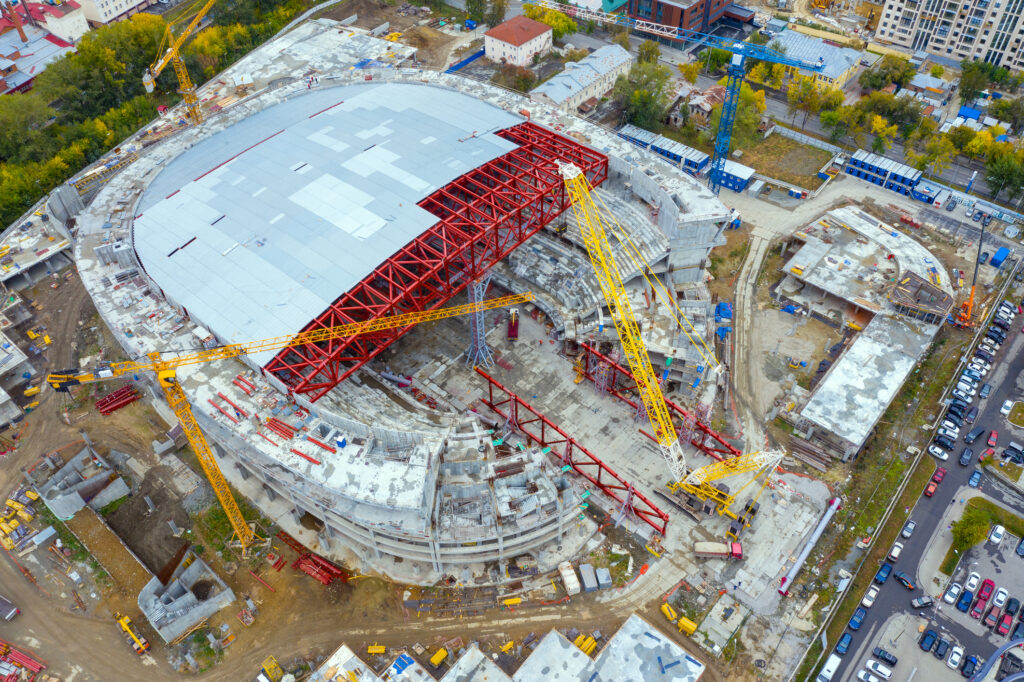
None of this is scandalous, but better sequencing and clearer communication about how «legacy» spending fits into the overall plan would help the public and organizers alike stay aligned on what to expect and when.
The portal also showed that most infrastructure projects were greenlit without formal environmental impact assessments: some 64% of projects by the third report. This was largely because the ‘extraordinary commissioner’ powers intended to accelerate procurement allowed environmental checks to be bypassed on grounds of urgency. That raises real questions about the long-term sustainability impact of the works, which was a core promise of the Games. Academic research finds that emergency procurement practices can become normalized well beyond the emergency itself, which is something else to watch in an area that takes in the UNESCO-listed Dolomites. Per-project carbon footprints were never published either, so the aggregate environmental cost of the Games remains unknown. The Milano Cortina Foundation estimates the event’s own emissions were slightly over one million tonnes of CO2 equivalent but that does not count the infrastructure. For more on the campaign’s findings, read our previous blog.
What stayed opaque
Future hosts should focus on the structural data gaps . The key organizer, SIMICO, was able to publish detailed project information, but data from national, regional, and municipal agencies was largely missing. Freedom of information (FOI) requests got a reply from Lombardy, and an initial refusal, then an indefinite postponement from the City of Milan. Lombardy’s own regional platform, when the coalition found it, listed 44 infrastructure projects that SIMICO’s portal did not.
The campaign’s 2025 analysis found the portal was also missing five projects from the official plan, along with ancillary projects tied to the Games but delivered locally or privately (the Milan Olympic village, two ski links from Cortina and the Val di Riga railway line). Some of these were added subsequently. The coalition’s third Open Olympics report reflected on this fragmented and siloed information and the need to bring all the works together better in one place.
SIMICO’s own portal data needed improvements too. Tender values were reported but not actual expenditure, and the portal did not disclose who was covering the increases. It named subcontractors — 516 of them, against 101 main contractors — but not the value of each subcontract, which was especially important information for the anti-mafia campaigners in Italy as it helps them look at the risks of criminal infiltration of supply chains. OCP’s request for interoperability, publishing the tender identification codes that would connect projects to the national anti-corruption authority’s data in the Open Contracting Data Standard, was also declined.
The Milano Cortina Foundation, responsible for staging the event, declared a €1.7 billion «Lifetime Budget» but never published it, and its classification by government decree as a private body, a decision now going before Italy’s Constitutional Court, meant voluntary disclosure requests went nowhere (this was also an important block on our efforts to open up the Summer Olympics in Paris 2024).
A late surge in spending opened up some gaps in civic monitoring too: the extraordinary commissioner for the Paralympics was allocated €328 million against an original Paralympic estimate of €71.5 million, and by the time the first quarterly report was updated at the end of January 2026 the figure had risen to almost €448 million, with the detail of what it funded published only weeks before the Games began.
Local knowledge
The depth and breadth of a group like the Open Olympics coalition benefits official planners, bringing ground-level knowledge of the terrain being built on. As Orlando puts it: the coalition’s members are «highly competent and possess a precise real world understanding of the territory, its topography, and its environmental constraints.» Involving civil society early can ensure «a sport venue or a highway or roads and other infrastructure serves an actual purpose and the future needs of the territory, rather than being a costly white elephant.» It matters, too, that those local authorities have the ability to maintain the infrastructure once the broadcast trucks leave.
Publishing regular monitoring reports produced results. Following the second report, new agreements were made with the major Italian unions to respect labor rights on construction sites, as well as with the anti-mafia authorities to strengthen law enforcement oversight of contractors and subcontractors. Some subcontracting data was opened up, helped along by public questioning from the Milan City Council’s joint Olympic and Anti-Mafia commissions.
International supporters joined in too. OCP identified missing data fields on the transparency portal that would have allowed advanced monitoring of corruption risks and other performance metrics: none of the integrity red flags the coalition wanted to track could be calculated from the portal as first built. Some of those fields were added.
Raising the bar for the next host
The clearest lesson from Milano Cortina is that transparency works best as a core principle from the very beginning, not as a response to pressure once problems surface. That’s the pitch the Open Olympics coalition is now taking to organizers of the 2030 French Alps Games, supporting French civil society organizations to start where Italy eventually arrived, rather than spend years getting there.
«In Italy, we obtained transparency only more or less at the end of the process, while we are working with the French to advocate for complete transparency also in the decision-making phases,»
The campaign hasn’t stopped with the closing ceremony. It has committed to keep going until the last project is completed, which on current schedules means 2033. In May, the team shared their lessons with the European Parliament at a public hearing on the hidden costs of big events, with French civic groups in the room. They are also following up on the rising costs associated with the Arena Santa Giulia, which rose from €180 to over €300 million (of which €51m was public funds). Their FOI request sent in September 2025 received a response in July 2026, but not the data they had asked for.
Asked what he was proudest of, Ferrante described sitting in a European institution with his shoes still caked in mud from monitoring the Cortina construction site and making sure that on the ground perspective gets heard in the places where decisions get made: as good a description as any of what civic monitoring is for.
The experience of Milano Cortina and the Open Olympics campaign shows that, despite all their challenges, sports mega-events can be done differently. The next generation of hosts shouldn’t be struggling to catch up at the finish line; they should be setting the pace from the starting block.
Key lessons from the Open Olympics and what future hosts should do differently
-
- Make one concrete, cheap, specific ask around transparency. Give institutions something they can say yes to and take credit for. «Being transparent» is vague; a single open-data portal, updated on a regular cycle, containing specific fields is winnable — and at roughly 0.01% of the works budget, it was cheap enough that refusing looked worse than agreeing.
- Build the picture yourself before asking anyone else to. The coalition’s proto-monitoring phase meant it arrived with a partial map already drawn up, a clear specification on what else was needed and how that would add value to the planning and delivery of the Games.
- Come as a partner. Framing the campaign around protecting the common good and being explicit that compiling the list of works was not civil society’s job in the first place kept institutional doors open.
- Publish regular monitoring reports. Recurring reports created regular accountability moments, and a standing expectation that someone will check next year whether anything improved. A single exposé does not.
- Leverage local organizations with boots on the ground. Groups rooted in a valley understand its geology, its constraints and its existing infrastructure. They can propose less damaging alternatives, and their municipalities are the ones that inherit the maintenance bill. Bringing them in during planning is cheaper than litigating with them during construction.
- Specify the data. A platform that publishes award values but not actual spending, names subcontractors but not subcontract values, omits funding sources and cannot be joined to the national procurement database looks transparent without enabling oversight. Name the fields up front, publish to an open standard like OCDS, include the identifiers that link to national systems, and commit to a refresh cycle you can actually hold.
- Scope disclosure across every actor in the delivery system. The transparency mandate must extend beyond the main delivery company to include national agencies, regional and municipal bodies, private developers, and the organizing committee itself. Given that these committees are often legally classified as private companies, ensuring full disclosure requires navigating their specific regulatory status to avoid transparency loopholes.
- Build sustainability criteria into tenders instead of waiving assessments. OCP’s Sustainable Procurement toolkit shows how this can be done proactively, rather than after the fact. Schemes like the Netherlands’ CO2 Performance Ladder give suppliers a pricing advantage for demonstrated efforts to cut emissions, so a slightly costlier bid can still win if it is genuinely greener.
- If special powers are granted for speed, attach compensating duties in the same instrument. Emergency decrees and commissioner powers were the mechanism by which environmental assessments were bypassed. Where a host judges those powers genuinely necessary, they should also bring in a matching duty of disclosure and monitoring, so the public can see what was set aside and why.
- Judge projects on life-cycle costs, and measure who actually benefits. Construction is procured in phases — design, build, use, eventual deconstruction — and the toolkit recommends life-cycle costing so that running, maintenance and environmental costs are weighed at the point of award. That is the discipline that closes gaps like the one between Milano Cortina’s bid values and its final bills, and it is the only honest way to price a «legacy» project that opens in 2033. Alongside it, track who the contracts go to: for example, Chile’s procurement agency began requiring agencies to monitor and reward contracts awarded to women-led businesses after research showed how small a share they were winning. Applied to Games contracts, that would say far more about whether an event benefited its host community than any headline spending figure.
One thing would make all ten easier. The IOC’s own Olympic Agenda 2020+5 stresses integrity, transparency and good governance, and states have made comparable commitments on procurement transparency under Article 9 of the UN Convention against Corruption. Turning those principles and transparency commitments into an enforceable condition of the bid — rather than an aspiration in the host contract — would be a gamechanger.


