Transforming Africa’s procurement: Locally owned, data-driven. A case study from Tanzania

About this case study
Tanzania has designed an intelligent e-procurement system that goes beyond tick-box transparency to make public contracting accessible. More than 62,000 buyers are already using the system, with measurable improvements in efficiency. The technology is now being institutionalized with a suite of tools – from mobile apps to a red flagging system – that will help authorities make better decisions and a diversity of suppliers to grow their businesses.
Challenge
Tanzania was one of the first countries in East Africa to have an electronic public procurement system. Introduced in 2018, the platform only covered some parts of the contracting process and wasn’t compatible with the government’s other public financial management systems. Consequently, most buyers continued to carry out their procurement on documents and paper, failing to submit their information to the procurement regulator. In the 2021/22 fiscal year, fewer than 200 procuring entities used the system to publish their awarded contracts, leaving millions in government spending out of public view. This exacerbated inefficiencies and corruption risks. Problems such as inflated costs and misallocated funds were often only detected after the fact, and small suppliers with limited resources faced barriers in competing for contracts.
Open contracting approach
The government replaced the previous e-procurement platform with a locally owned solution. In 2022, the Public Procurement Regulatory Authority (PPRA) began building a customized, transactional e-procurement system in-house. They took a whole-of-government approach, forming a team of cross-agency experts and digital transformation specialists to ensure the platform was fit for purpose. In 2023, Tanzania passed a new Public Procurement Act to make government contracting more open, efficient and accountable, incorporating recommendations from various stakeholders, including civil society and international institutions. The law also mandated all public buyers to use the new e-procurement system. PPRA approached OCP in 2024 for guidance on publishing standardized, open data in the internationally recognized Open Contracting Data Standard (OCDS) format. OCP also supported capacity building sessions, hosted by PPRA and the civil society organisation WAJIBU – Institute of Public Accountability (WAJIBU), to encourage local governments to adopt inclusive purchasing practices that promote opportunities for small businesses, especially enterprises owned by women, youth, the elderly and people with disabilities.
Results
Within two years, Tanzania developed its own end-to-end platform National e-Procurement System of Tanzania (NeST). The system integrates 20 government services, from supplier registration to payments and complaints. Now, all 62,000 procuring entities are using the platform to award contracts, from rural schools and health clinics to major cities and national agencies. Mobile apps give buyers and suppliers easy access to a simplified version of NeST too. Live data on annual procurement plans, current tenders (including donor-funded contracts), contracts awarded and suppliers from underrepresented groups can be searched online. Businesses now have a clearer idea of what their opportunities are and how to benefit from them. Efficiency is up – the tendering process is 30% faster with NeST, taking 80 days on average compared to 116 days with the old system, an analysis of PPRA data shows.
With technical assistance from OCP, the government has been publishing real-time open data since June 2025, enabling timely public monitoring of the procurement system, and a new red flags system is under development. OCP also supported training for small businesses in five municipalities (Tabora’s Igunga Council and Sikonge Council, Mwanza’s Kwimba Council, Mara’s Tarime Council, and Mbeya City Council) which resulted in a three-fold increase in supplier registrations on NeST in those areas, leading to 38 entrepreneurs winning public contracts. After successfully testing this model, we’re now supporting PPRA and WAJIBU to scale it across 30 local governments.
3 strategies behind Tanzania’s open contracting reform
In the Igunga district of Tabora in Tanzania’s northwest, businesswoman Rahel John supplies stationery and office equipment to the Ministry of Education, Science and Technology. Ally Yusuph, a brick manufacturer, has a public contract to build classrooms in Migerere village. Local entrepreneurs like these are becoming government suppliers with the help of Tanzania’s new open and intelligent electronic procurement system.
In 2022, Tanzania began developing a new transactional e-procurement platform. It was reinforced by a major legal reform in 2023 aimed at encouraging transparency, competition and value-for-money, while addressing widely recognized inefficiencies and corruption risks.
When the new law and its regulations came into effect in mid-2024, all the country’s procuring entities were mandated to use the new e-procurement system.
By founding the reform on an open contracting approach, it became less about publishing data and more about generating actionable insights: ones that would help procuring entities spend wisely and avoid delays; give a diversity of suppliers a fair chance in the market; and assist auditors and civil society to flag and fix problems early.
Tanzania’s Public Procurement Regulatory Authority (PPRA) turned to the following strategies to implement the transformation and ensure its widespread uptake.
1. Creating a locally owned solution
The new e-procurement system had to be developed in compliance with the new legislation. PPRA realized that relying on international vendors would be unsustainable, because past experience indicated they didn’t have an affordable and effective way to tailor the design to the unique needs of the Tanzanian procurement framework.
At the time, Tanzania’s government was implementing a digital transformation agenda that the PPRA tapped into. The authority drew on that experience and ICT experts from other public agencies to complement the existing technical staff. They set up a team of around 60, made up of procurement professionals, legal advisors and engineers, and overseen by the finance ministry, to start an agile development process mid-2022.
Building NeST took about two years. A pilot version of the system was released in May 2023 to allow for real-world testing and adjustments, followed by a full launch in September 2024 (including e-registration and e-tendering modules) at the East African Procurement Forum. An e-contract module was integrated in December 2024.
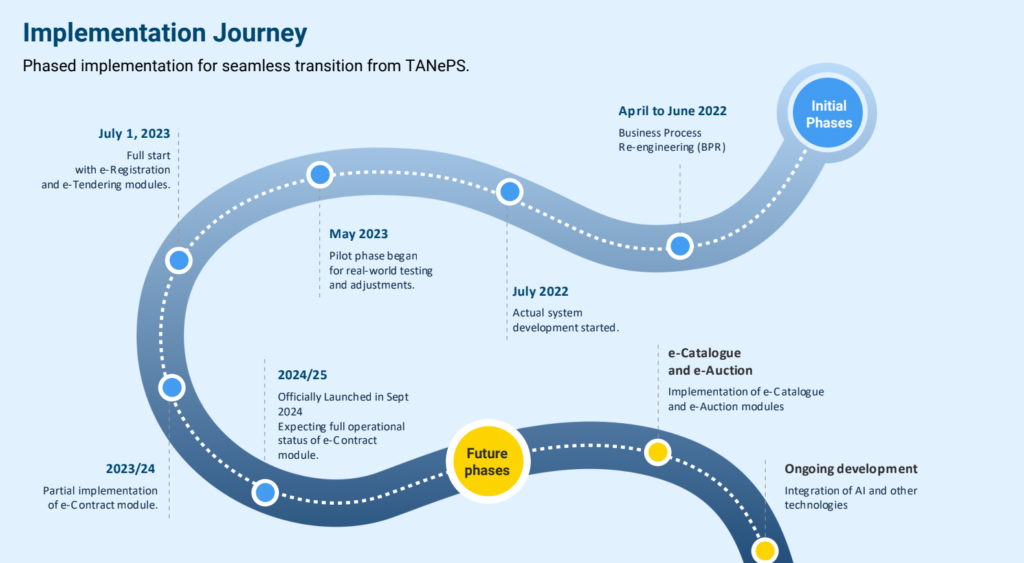
Throughout, PPRA led capacity building with procuring entities, communicating upcoming changes and hosting training for each new module. Participation in the weekly 1-2 hour sessions every Wednesday increased to as many as 3000 participants.
Nationwide adoption was critical: the more buyers used the transactional platform, the more high-quality data would be generated, revealing patterns across the entire procurement system, such as competition, economic inclusion and other important performance metrics. Structuring the data in a common format known as the Open Contracting Data Standard (OCDS) would make analyzing the data easier and allow the PPRA to reuse existing OCDS tools and approaches.


With support from the OCP team, a week-long Open Contracting Data Standard (OCDS) Bootcamp in April 2025 provided the PPRA technical team with additional skills and tools to effectively publish and use standardized data. They initially focused on transforming tender stage data into a valid open data format.
Of all the stages of the public procurement cycle, the tender stage had the most readily available data and represented a high-risk phase where early intervention could prevent problems later in the process. Based on their experience introducing open contracting data in Rwanda, the OCP team also knew the tender stage provided a rich set of issues that the Tanzanians would need to grapple with, providing a practical starting point for developing their understanding of OCDS.
Having successfully transformed the tender stage data during the bootcamp, the PPRA technical team continued transforming the data generated from other stages and officially launched the OCDS data portal in June 2025. The team consisted of full-stack developers, back-end developers, a business analyst, database administrator, data analyst and a procurement expert.
Michael Moshiro, PPRA Director of Information and Communication Systems, said, “OCDS served as our framework. By transforming data into the OCDS format, we created opportunities to use it more effectively, as it is a user-friendly format that enables data reuse to drive better performance and improved outcomes in Tanzania’s public spending.”
2. Building an integrated and data-driven e-procurement system
The country’s previous procurement system, Tanzania National e-Procurement System (TANePS), introduced in 2018, was semi-automated and difficult to integrate with other systems.
Dennis Simba, PPRA Director General, said, “approvals, for example, were handled manually outside the system, making it challenging to ensure accountability. Additionally, generating reports from the information was difficult, as much of it was uploaded as documents.”
In contrast, the new platform, the National e-Procurement System of Tanzania (NeST) connects 20 government systems, including company registration, with the goal of digitalizing the full public procurement process end-to-end.
Now, important steps are completed online for the first time. When suppliers enter their unique registration number in the system, other business information and credentials are loaded to their profile automatically.
NeST also links up to the vendor payment system. A pilot started in August 2025 allows suppliers to request payment and track it through the system. As of February 2026, the payment module is operational for two procurement categories: goods and non-consultancy, with more to come.
Late payments and contract-breaking fines are a common problem in Tanzania’s procurement system. So much so, that a 2022/23 audit by Tanzania’s Controller and Auditor General found interest charges and penalties due to payment delays amounted to TZS 72.36 billion (about US$30 million).
The interoperability serves other government agencies as well. For example, employees from the tax authority can check the validity of tax declarations more easily.
A mobile application for buyers provides a simplified process targeted at the 60,000 rural public entities, such as local schools or health clinics that aren’t run by procurement experts. Entities can complete the entire process in the app including announcing, awarding and preparing the contract. The evaluation criteria are semi-automated too to ensure compliance with regulations and policies and reduce human bias.
Another mobile app for suppliers allows small businesses to access basic information about opportunities. That is, to apply, they still need to use the desktop version, but PPRA is exploring the inclusion of the “apply” function on mobile for simple tenders.
3. Working in coalitions to increase accountability and inclusion
PPRA has worked constructively with civil society to increase accountability and support inclusive purchasing from small businesses, particularly enterprises owned by women, youth and people with disabilities. To combat unemployment and promote economic opportunities for Tanzanians, the procurement law requires procuring entities to allocate 30 percent of their annual procurement to these special supplier groups. But in the past, only two percent of buyers complied, according to the MAPS assessment of Tanzania’s procurement system.
One of the organizations involved is WAJIBU – Institute of Public Accountability. Founded in 2015, WAJIBU’s previous evidence-based advocacy was instrumental in bringing together civil society, professionals and institutions to draft recommendations that subsequently informed the new procurement law.
“Public procurement is a large chunk of any government’s budget,” said its Executive Director, Ludovick Utouh, the former Controller and Auditor General, in an interview for Hivos. “In Tanzania, procurement accounts for well over 70 percent of the government budget. So we immediately saw procurement as an important area to focus on accountability,” Utouh added.
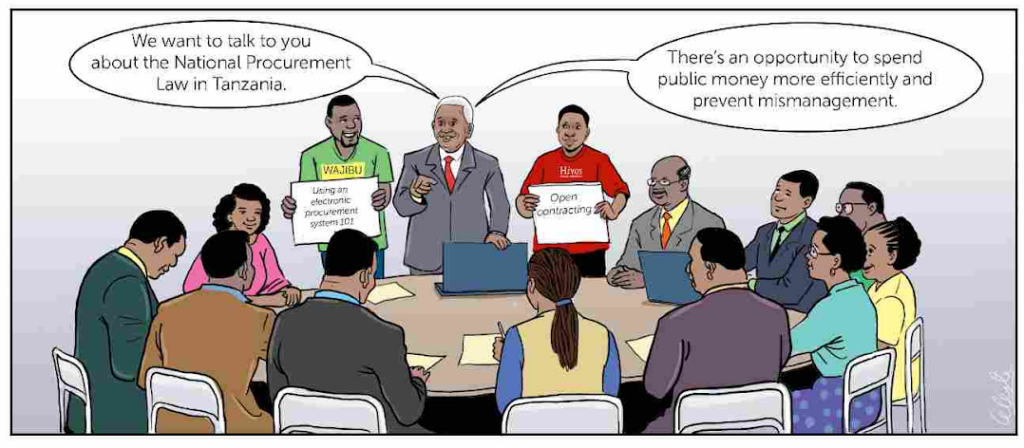
WAJIBU engaged with PPRA in workshops and meetings to address key transparency gaps in the procurement framework at the time, including publishing the final costs of contracts.
There were some obvious quick wins: “The law required publication of a justification when single-sourcing was used, but it wasn’t published,” remembers Jackson Mmary, public procurement projects manager – WAJIBU. PPRA already recorded the justifications. They asked: “Why don’t you publish it?”
The old system also allowed some tech-savvy vendors to win dozens of tenders beyond their capacity, while smaller suppliers had difficulties using the portal, explains Mmray.
With OCP support, WAJIBU and another civil society organization Twaweza East Africa trained 345 small business owners in five municipalities (Igunga Council and Sikonge Council in Tabora, Kwimba Council in Mwanza, Tarime Council in Mara, and Mbeya City Council in Mbeya) on how to participate in public tendering. As a result, 38 entrepreneurs landed contracts, some more than once.
“Most of them managed to receive a contract for the first time. This creates jobs and economic inclusion,” says Mmary.
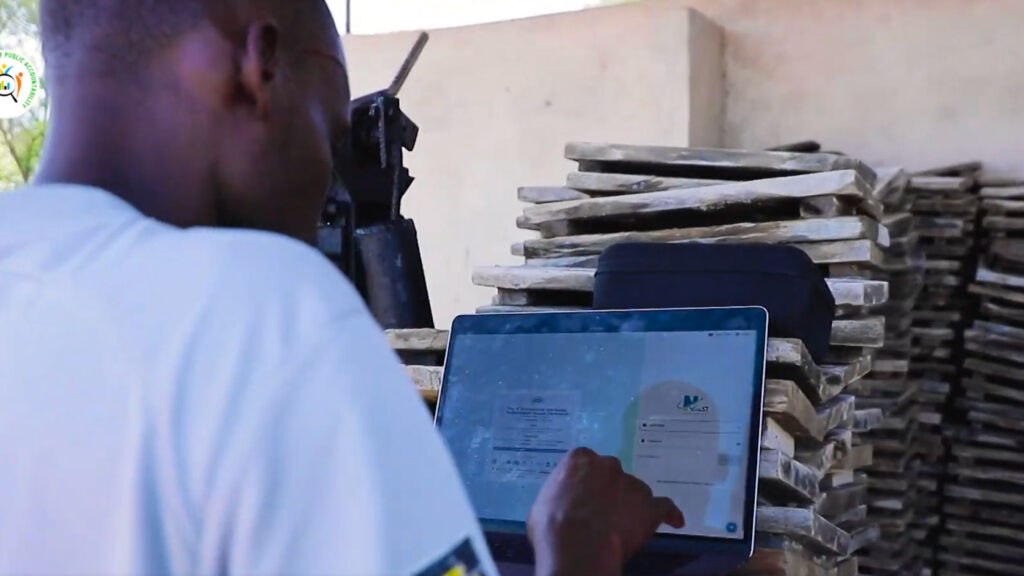
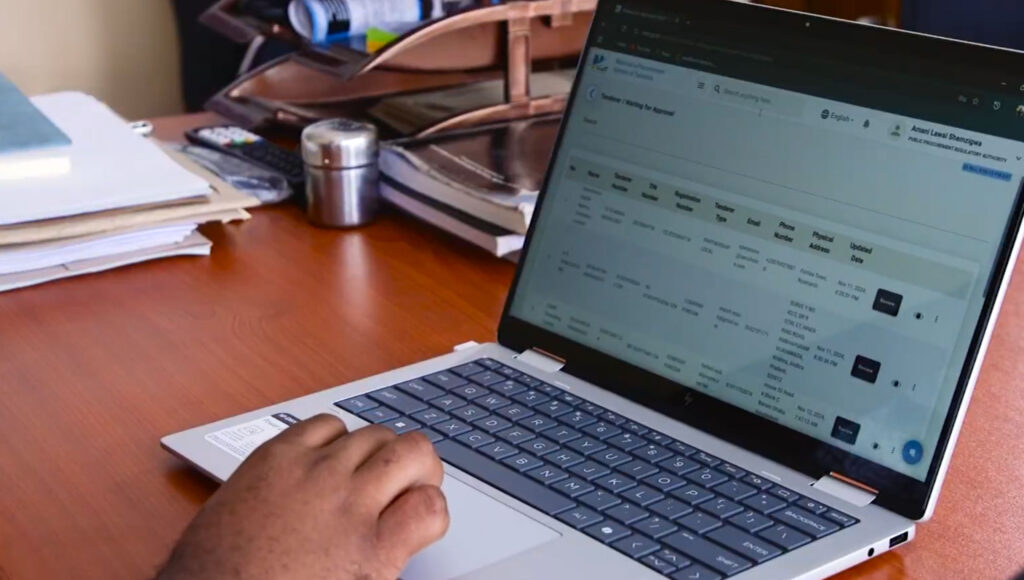
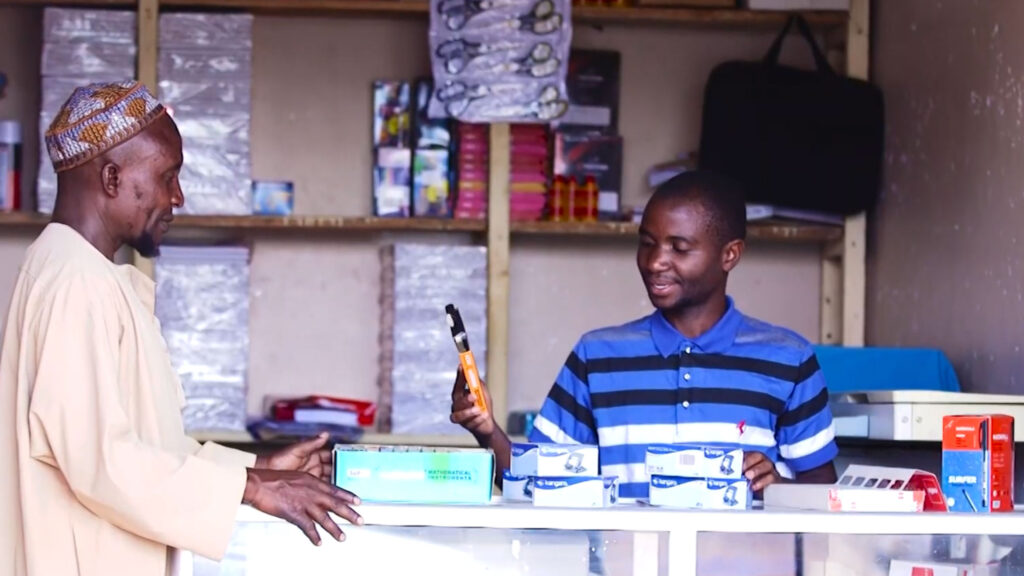

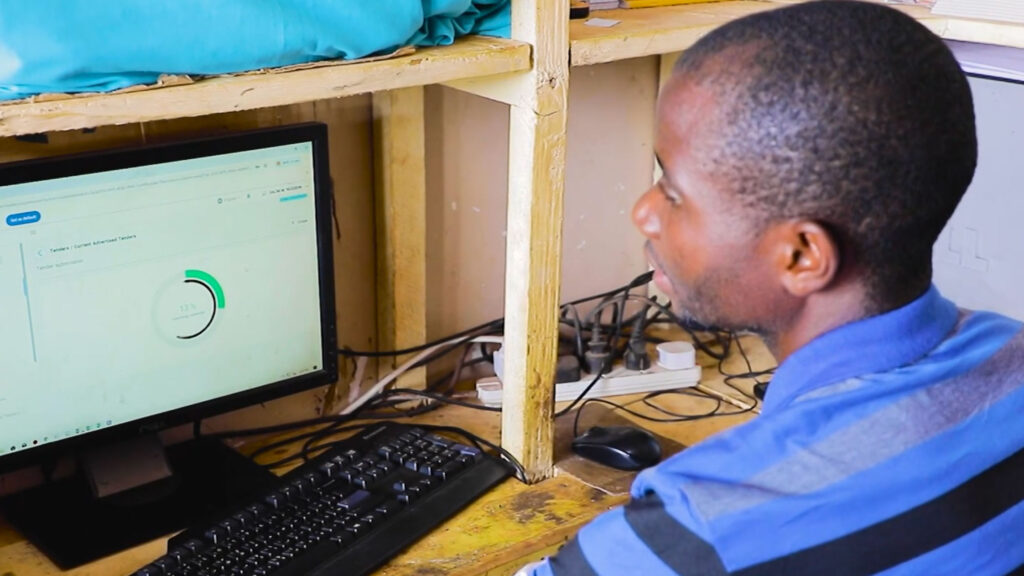
Registrations in NeST from suppliers in the five municipalities rose from 47 before the training to 172 after. Notably, Kwimba District Council established designated spaces equipped with public computers to support small businesses with their tender applications.
“We understood that if we support them, they will join the system, which will enhance competition. Then we will be able to ask them to track if there is any corruption,” Mmary adds.
The success of this initiative showcased what was possible, allowing PPRA and WAJIBU to scale the model with 30 local governments reaching more than 2,000 potential suppliers.
The team also saw an opportunity for procurement to be a “step ladder” for informal businesses to join the formal economy. Previously, they were excluded from the procurement market because they couldn’t register without a business license or tax identification number. As part of a scheme known as force account approach, government buyers can engage local small businesses in low-value construction works, paying them on a daily basis. Through these arrangements, the contractors have contact with the Ministry of Community Development which guides them gradually in transitioning to formal registration as they gain experience and income.
“The way to create new businesses is to nurture young professionals,” says Mmary.
How OCP supported
OCP has been working with Tanzania’s PPRA to transform data from its e-procurement system, NeST, into OCDS to increase transparency and accountability, including the week-long bootcamp that brought together the development team.
WAJIBU also received support from OCP to work with local governments on assisting small businesses to register on the NeST system, participate in tenders, and encourage data use from the system.
This work was carried out with the assistance of the UK Foreign, Commonwealth and Development Office, the GIZ Good Financial Governance Program in Tanzania, and the United Nations Office of Drugs and Crime.
Results in detail
The multi-stakeholder approach helped ensure the system had buy-in and delivered real value. Within two years, Tanzania developed the new end-to-end e-procurement platform NeST, integrating key services, from business registration to payments, to increase efficiency and simplify the procurement process.
Now, all of the country’s 62,000 public buyers, from rural schools and health clinics to major cities and national agencies and ministries, are registered on the platform (not including Zanzibar which has its own public procurement system). Annual procurement plans are being published online, more than 371,000 tenders have been advertised and over 300,000 contracts awarded in the 18 months since NeST was first piloted.
According to data provided by the NeST team, nearly 40,000 suppliers have registered since the portal was launched.
| Number of suppliers registered on NeST | ||
|---|---|---|
| 2023 | 2024 | 2025 |
| 13,942 | 17,140 | 8,808 |
In addition, 144 suppliers from “special groups” had registered by September 2025.
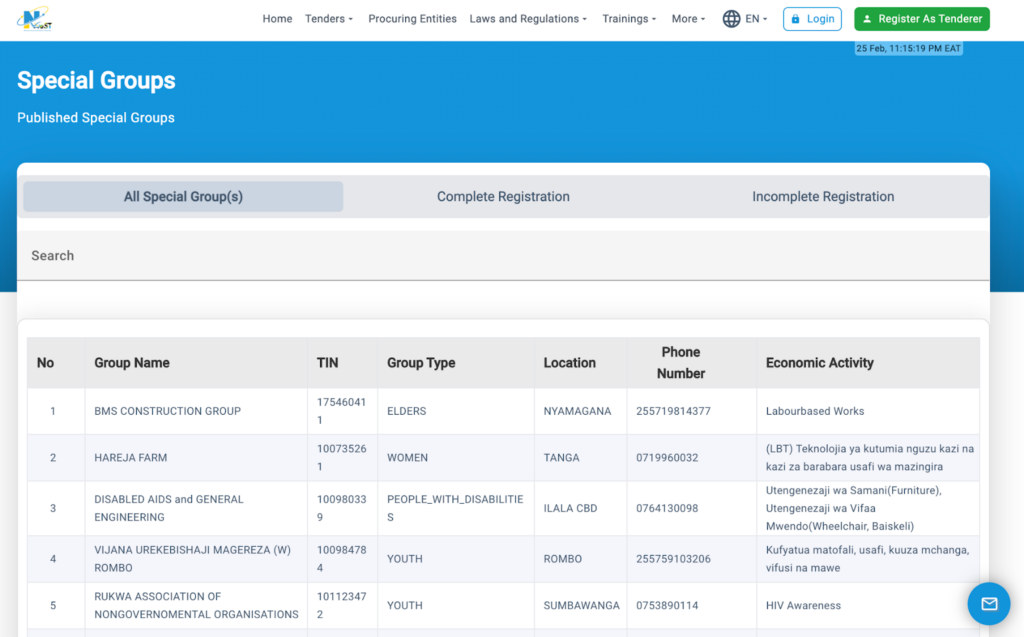
According to the publicly available data analyzed by OCP, the number of unique procuring entities publishing tenders on NeST increased from 9,000 in 2024 to more than 22,500 (or from around 15% to 35% of buyers).
The number of suppliers awarded contracts has increased from 6,600 in September, 2024, to 18,600 in June 2025.
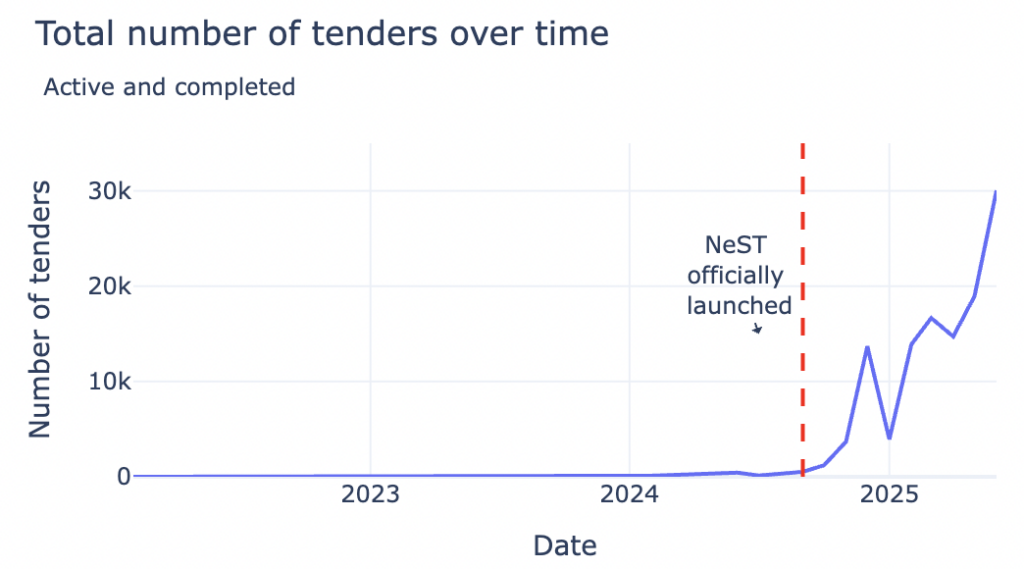
The number of tenders published each month has increased, from 15,300 in September 2024, when NeST was officially launched, to more than 30,800 in December 2025. The number of contracts awarded monthly has increased from 8,600 to 18,000 over the same period. The total value awarded has risen as well, from around 688 billion TZS (US$266 million) in September 2024 to 1.8 trillion TZS (US$718 million) in October 2025.
A review of procurement methods shows an increase in competitive methods. About 94% of tenders use a limited procedure, where the procuring entity approaches a number of suppliers of its choice (also known in Tanzania as restricted methods). The most common procurement method is “National Shopping,” a low-value, simplified request for quotations. Direct procedures decreased from 6.5% to 4.5%.
Efficiency has increased as well. Using the new system reduced the procurement lifecycle across all competitive procurement methods. According to data provided by PPRA, the average procurement process time (from tender start date to award) decreased by 30%, from 116 days using the old system to 80 days after NeST was launched. The process was faster on average for 20 of the 24 procurement methods used in Tanzania, with the biggest reductions seen in competitive methods.
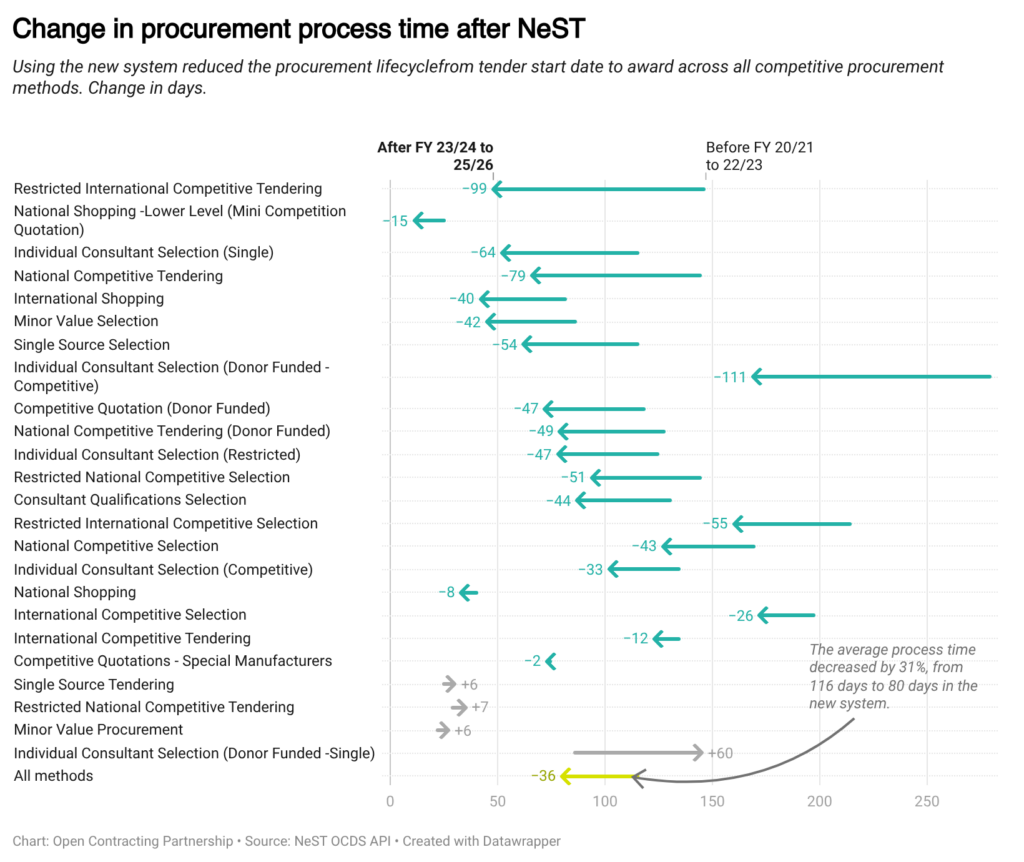
Efficiency continues to improve as use of the system increases. OCP’s review of OCDS data showed the average tender processing time during NeST’s pilot phase was 51 days, and has since dropped to 22 days after the official launch in September 2024. The process was faster for 17 out of 18 procurement methods.
What’s next
After successfully integrating open contracting data in the new system, PPRA has its sights set on creating what the team refers to as a “situation room”, where the government can track the performance of the procurement system in real-time.
They’re developing an automated risk monitoring system, set to be launched in 2026, that detects red flags related to potential corruption, competition, cost, or other factors that might restrict participation in public procurement.
“The red flag system we are building will rely entirely on OCDS data,” said PPRA Director of ICT, Michael Moshiro. “We currently have two versions: a public OCDS dataset and an internal one with additional fields for internal use. In the future, we expect the OCDS data to help us measure the effectiveness of the system we have built and to reveal activities across the entire procurement cycle,” he added.
We are transitioning from having data to information, which is going to help us make the right decisions. We started this journey to be more proactive than reactive.»
PPRA Director General, Dennis Simba said, “we are transitioning from having data to information, which is going to help us make the right decisions. We started this journey to be more proactive than reactive, and that is why we decided to invest time and resources, and with the support of OCP, develop a red flags system that actually works.”
Meanwhile, Mmary from WAJIBU is looking forward to using the newly available open data, and expects it to be even easier to track from the procurement plan to when the contract is published.
“Previously, the government used to say that the information is confidential and personal. But I am very happy that Tanzania’s procurement law is one of the most transparent in East Africa,” he said.
With NeST, Tanzania, an early adopter of digital procurement in Africa, is carving out a new path for smart procurement that is locally owned, data-driven, and open for business.


